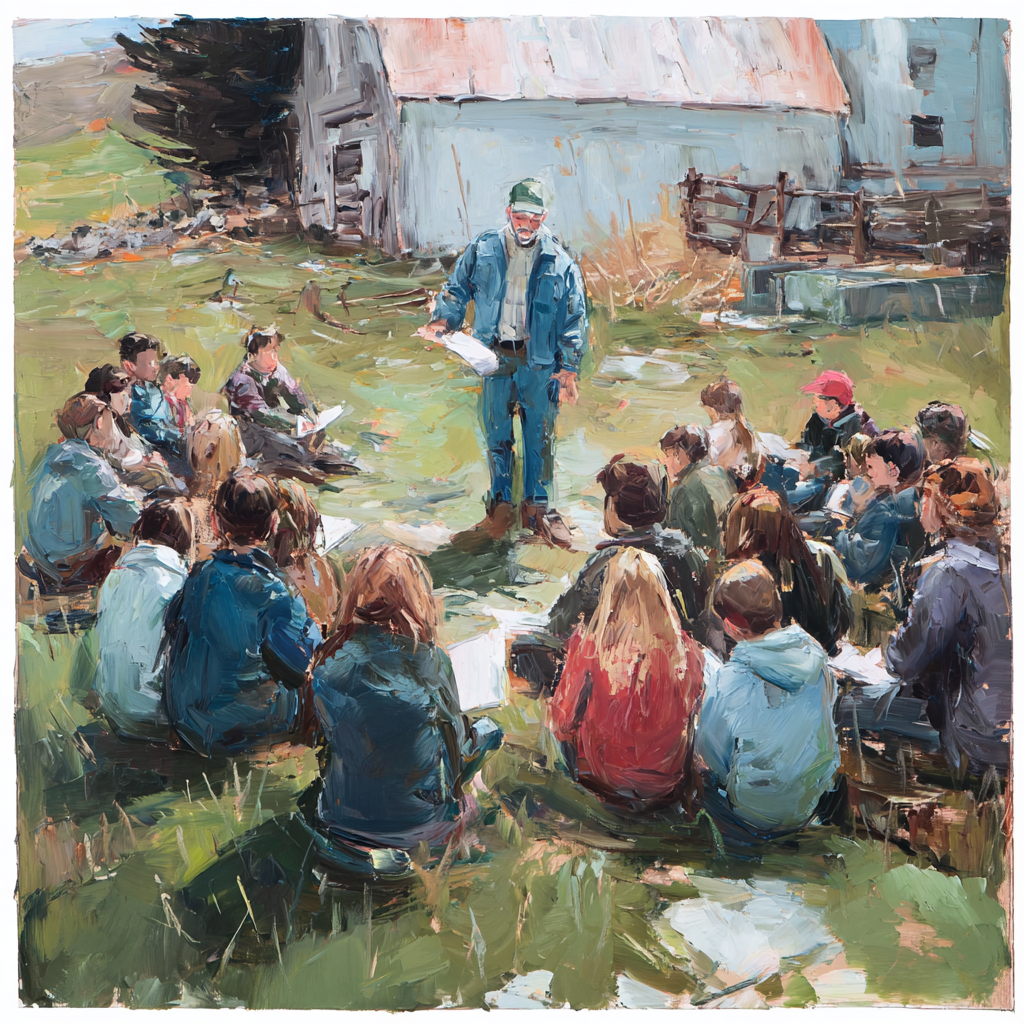
Rural school districts cannot find teachers. This is not news. What remains invisible is why the shortage persists despite decades of attempted solutions.
The problem is not that rural communities lack talented people. The problem is we built a teacher preparation system that ignores rural existence entirely.
Universities train teachers in cities and college towns. They recruit suburban students, provide student teaching placements in urban schools, graduate teachers who have never entered a rural classroom. Then we expect rural districts to hire from this pool. We are surprised when it fails.
The geography is impossible. A recent graduate trained in a city, carrying $50,000 in student debt, with family three states away—we ask this person to move to a town of 2,000 for a salary $15,000 below suburban rates. Most decline. Those who accept usually leave within two years.
This is infrastructure failure, not recruitment failure.
The System That Produces No One
Teacher preparation is infrastructure. It produces the workforce education systems require. Our infrastructure optimizes for urban and suburban markets. Rural districts are attempting to operate using infrastructure built for someone else.
The pattern is consistent: Rural districts post positions. Few qualified candidates apply. Districts hire whoever accepts—usually the least experienced, those who could not secure suburban jobs, emergency-certified substitutes with no training. These teachers stay one to three years and leave.
Advanced courses disappear first. When districts cannot fill positions, they eliminate programs rather than lower class sizes. AP courses vanish. STEM offerings shrink. Foreign languages are cut. Rural students face categorical disadvantage for college admissions because their schools cannot offer what suburban schools provide as standard.
The turnover rate tells the story clearly. In many rural districts, 30-50% of teachers leave within three years. This is not anomaly. This is how the system functions when geographic reality meets preparation designed for different contexts.
What Happens When We Stop Recruiting
Grow Your Own programs start with different premise: the people who will become the best rural teachers already live in rural communities.
They are paraprofessionals who have worked in classrooms for fifteen years but lack formal credentials. Recent high school graduates who want to stay home but see no professional pathways. Mid-career professionals—retired engineers, agricultural specialists, former business managers—who want second careers but cannot afford four years of university.
These are the people rural districts should be developing, not the people universities are training three hundred miles away.
The retention data is unambiguous. Traditional recruitment produces 50% turnover within three years. Grow Your Own programs achieve 85% retention after five years. Many GYO teachers stay entire careers—twenty, thirty years in the same district.
The difference is not mysterious. People stay where they have roots. People leave where they don’t.
Illinois operates one of the country’s most established GYO programs. They recruit paraprofessionals, provide tuition-free training through community college partnerships, support candidates through certification, guarantee jobs upon graduation. Retention exceeds 85% at five years.
Iowa’s program shows similar results: 90% retention at three years, teaching effectiveness comparable or superior to traditionally prepared teachers. Oregon’s Teacher Pathway programs demonstrate the pattern holds across different rural contexts.
This is not experimental. This is documented infrastructure that works.
The Dialectical Work Required
Accepting that localization beats standardization for rural contexts requires abandoning comfortable assumptions.
We are accustomed to one-size-fits-all teacher preparation. Everyone attends university, receives identical credentials, enters the workforce through the same pathway. This uniformity was supposed to ensure quality. Instead, it ensured rural failure.
Localized pathways work better. Community colleges are geographically accessible. Candidates train while maintaining local employment and family connections. Preparation addresses rural-specific contexts: multi-age classrooms, agricultural integration, community engagement, limited resources. Graduates understand where they are teaching because they never left.
This requires state certification boards to recognize that multiple pathways can produce equivalent outcomes. A paraprofessional who has worked in classrooms for a decade, completed community college coursework, passed subject exams, and demonstrated teaching competency is as qualified—often more qualified—than a recent university graduate with zero classroom experience and a generic credential.
The university pathway works for some contexts. The GYO pathway works for rural. Both can maintain high standards.
The credential-versus-capacity tension challenges professional norms directly. Teaching has emphasized formal credentials as proxies for competence. This protected against unqualified people entering classrooms. But credential worship went too far.
We now exclude capable people because they lack paperwork while accepting incapable people because they have degrees. A retired engineer demonstrates math competency through career experience plus subject exams, not by retaking college calculus. A paraprofessional demonstrates classroom management through fifteen years working with students, not through university courses on theory.
This is not lowering standards. This is recognizing competency wherever it exists and providing accessible pathways for capable people to gain credentials they lack.
What Federal Policy Could Actually Do
The mechanism is straightforward: federal funding for Grow Your Own programs, streamlined state certification pathways recognizing alternative preparation, technical assistance helping rural districts design teacher development pipelines.
$2 billion annually would support 2,000-3,000 rural districts over a decade. This produces 30,000-50,000 certified rural teachers at $40,000-$67,000 per teacher—including tuition, stipends, program coordination, mentorship infrastructure.
The math matters here. Traditional recruitment costs $8,000-$15,000 per hire. With 50% turnover in three years, districts recruit two to three teachers for the same position. True cumulative cost: $16,000-$45,000. GYO costs more upfront but produces 85% retention. The position stays filled.
Three proven program models exist, ready for scaling:
Paraprofessional Pathway converts current school staff into certified teachers through part-time community college coursework over 2.5-3 years while they continue working.
High School Graduate Pathway supports recent graduates through associate’s degrees with paid teaching assistant work, then completes bachelor’s requirements. Four years total, employed throughout.
Career-Changer Pathway provides accelerated alternative certification for mid-career professionals with relevant bachelor’s degrees through intensive summer coursework and year-long paid residency.
All three models include rural-specific preparation: multi-age classroom management, community engagement training, agricultural and natural resource education integration where relevant.
State certification flexibility is essential. Prior learning assessment that credits paraprofessional classroom experience toward requirements. Competency-based progression allowing content knowledge validation through exams rather than retaking courses. Provisional licensing enabling GYO candidates to begin teaching while completing final requirements under intensive mentorship.
Community colleges provide training infrastructure. Regional coordinators offer implementation support. Federal oversight ensures quality standards and tracks outcomes.
The political barrier is minimal. This is rare policy win across constituencies. Rural communities gain teacher stability. Community colleges gain enrollment. States reduce emergency certification costs. Teachers unions support job creation and improved working conditions. The only losers are university education programs losing enrollment—and even they benefit from articulation agreements enabling GYO bachelor’s degree completion.
The Community Stakes
When talented young people must leave for professional opportunities, rural communities lose future leaders. When schools cannot maintain quality, families leave or send children elsewhere. When education collapses, property values decline and economic base erodes.
GYO programs can reverse this spiral. Talented locals become professionals without leaving. Schools maintain quality because teachers stay. Communities retain population because education is stable. Economic stability follows educational stability.
Some will argue this creates insularity. Teachers who only know one community, never exposed to broader contexts, potentially reinforcing local limitations. This concern has merit.
But the critique assumes outsider perspective is inherently superior to insider knowledge. Often the opposite is true. Deep community understanding enables more effective teaching than generic preparation. And GYO programs can require culturally responsive pedagogy, exposure to diverse perspectives, connection to broader educational research while maintaining local roots.
The quality question matters: can community colleges provide preparation equivalent to universities? Research says yes. Outcomes matter more than institutional prestige.
What Patient Investment Looks Like
This succeeds only if federal funding sustains for a decade. GYO programs require patient investment. First cohorts train for three to five years before producing certified teachers. Early cohorts must demonstrate success before later cohorts feel secure investing.
One-time appropriations that lapse destroy community trust and waste initial investments.
This is infrastructure investment, not program funding. Like roads or water systems, developing teacher pipelines requires sustained commitment across political cycles. Rural communities have been neglected by education policy for generations.
Grow Your Own programs offer pathway to sustainability—but only if commitment is real.
The choice is between continuing to recruit teachers who don’t stay, or developing teachers who do. The former is familiar and failing. The latter works but requires accepting that the infrastructure we built does not serve rural contexts, that localization can produce better outcomes than standardization, and that community members we are currently excluding may become exactly the teachers rural students need.
The teachers who will stabilize rural education are already there. We just have to stop looking elsewhere and start building the pathways that let them teach.
PHASE 1: PROBLEM FRAMING
Umbrella Problem: Rural school districts face chronic teacher shortages and high turnover, forcing them to operate with inexperienced, temporary, or uncertified staff—resulting in curriculum degradation, educational inequity, and community destabilization as local students lose access to advanced courses, STEM education, and the cultural continuity that stable teaching provides.
Macro Drivers:
- Rural districts cannot compete financially with urban/suburban salaries — Geographic salary gaps ($10,000-$20,000 lower rural vs. suburban) combined with higher cost-of-living-adjusted teacher debt burden makes rural positions economically unattractive to certified teachers with options.
- Traditional teacher recruitment pipelines ignore rural contexts — University teacher preparation programs are located in urban centers, train students for suburban/urban schools, provide no rural-specific preparation, and graduates have no connection to rural communities they would serve.
- Teacher turnover creates institutional knowledge loss — High turnover (30-50% within 3 years in many rural districts) prevents curriculum continuity, eliminates mentorship for new teachers, destroys community relationships, and forces constant re-training investment with no retention return.
- Credential requirements create barriers for local talent — State certification systems require 4-year degrees and expensive testing, excluding capable community members (paraprofessionals with decades of classroom experience, retired professionals with subject expertise) who lack formal credentials but possess local knowledge and community investment.
- Advanced curriculum is first casualty of staffing instability — When districts cannot fill positions, they eliminate programs (AP courses, foreign languages, advanced STEM) rather than lowering class sizes, creating two-tier education system where rural students are categorically disadvantaged for college admissions and STEM careers.
- Community cultural erosion follows educational decline — When local students must leave for quality education, they rarely return; when schools cannot maintain quality, property values decline; when young families leave, economic base erodes—creating death spiral where education collapse and community collapse reinforce each other.
Component Selected for This Blueprint: Traditional teacher recruitment pipelines ignore rural contexts.
This driver addresses the supply-side failure. Universities produce teachers for suburban schools; rural districts try to recruit from this mismatched pool and fail. Grow Your Own (GYO) programs bypass broken recruitment by developing teachers internally—people already embedded in community, invested in staying, familiar with local context. Solving this component does not immediately fix salary gaps or credential barriers, but it creates sustainable workforce development pathway that produces teachers who actually stay, which allows all other problems (curriculum stability, institutional knowledge, community continuity) to become solvable.
PHASE 2: DECONSTRUCTION
Upstream Driver Analysis:
- Actor: State teacher certification boards, university colleges of education, rural school district HR directors
- Incentive/Constraint: Universities optimize for enrollment numbers and graduate employment statistics—training teachers for large suburban/urban markets maximizes both; rural placements are small markets not worth program customization; certification boards create one-size-fits-all requirements favoring traditional 4-year university pathway, excluding alternative routes that would serve rural contexts; rural districts lack HR capacity to build sophisticated recruitment programs, defaulting to job postings that attract no qualified applicants
- Behavior: Universities locate teacher preparation programs in cities/college towns (not rural areas), recruit students from suburban backgrounds, provide student teaching placements in urban/suburban schools, graduate teachers with no rural experience or interest; certification boards require expensive testing and credentials that exclude local talent (paraprofessionals, community members); rural districts post jobs, receive few/no applicants, hire whoever will accept (often least experienced or emergency-certified), watch them leave after 1-3 years
- Loop: Rural districts face shortage → hire inexperienced/temporary teachers → quality declines → families leave or send kids to boarding schools → community erodes → fewer local students to cultivate as future teachers → shortage worsens → positions harder to fill → cycle accelerates
Why This Driver Matters: Teacher preparation is infrastructure—it produces the workforce that determines whether rural schools can function. Current system produces teachers for urban/suburban markets. Rural districts are asking universities to train workers for jobs universities don’t understand, serving communities universities have no connection to, in locations universities don’t operate in. This is structural mismatch.
Empirical data shows problem and solution clearly. Traditional recruitment: rural districts hire from general teacher pool, 50% turnover within 3 years, constant staffing crisis. Grow Your Own programs: recruit from within community (paraprofessionals, recent graduates, career-changers with local roots), provide tuition/training through community college partnerships, 85%+ retention after 5 years. The difference is not mysterious—people stay where they have roots, leave where they don’t.
But fewer than 200 of 9,000+ rural districts in U.S. operate GYO programs. Most don’t know GYO exists as option. Those that do often lack capacity to design programs. State policies create barriers (certification requirements that GYO pathways struggle to meet, funding formulas that don’t support alternative preparation). The solution exists and works; adoption is minimal.
Entry Point: Create state-level policy framework and federal funding supporting Grow Your Own teacher preparation programs as primary rural teacher workforce development strategy, with standardized implementation models, streamlined certification pathways, and dedicated financing that makes GYO cost-neutral for rural districts.
PHASE 3: DIALECTICS
Core Tension: Standardization / Localization
Current Weighting: 90/10 (Standardization-dominant)
How We Got Here: Teacher certification evolved to ensure minimum quality standards—preventing unqualified people from teaching children. This was moral progress from era when teachers needed no training. Over time, standardization became absolute: all teachers must complete identical pathway (4-year university degree, state exams, student teaching), regardless of subject, location, or prior experience. The logic: maintaining high standards requires uniformity. Rural-specific pathways were dismissed as “lowering the bar” or creating “separate and unequal” systems. One-size-fits-all certification treated geographic diversity as irrelevant—teaching is teaching, standards are standards.
Cost of Current Imbalance: Rural schools cannot staff positions because standardized pathways produce teachers with no rural connection or preparation. Talented local candidates (paraprofessionals with 20 years classroom experience, retired engineers who could teach math, agriculture specialists who could teach science) are excluded because they lack formal credentials. Standardization optimized for suburban contexts becomes barrier to rural quality. The pursuit of uniform standards produces actual inequality—rural students lose access to qualified teachers entirely while urban/suburban students benefit from deep applicant pools.
Target Weighting: 50/50 (Balanced integration)
What This Means in Practice: Core teaching competencies remain standardized—content knowledge, pedagogical skill, child development understanding, assessment literacy. Pathways to demonstrate those competencies become localized—rural districts can develop teachers through community college partnerships, apprenticeship models, alternative certification that recognizes prior learning (paraprofessional experience counts toward requirements). Standardization ensures quality; localization ensures accessibility. Balance means high standards achieved through flexible pathways.
Who Bears the Cost: Universities lose enrollment from teacher preparation programs (GYO students train through community colleges, not universities). Certification boards must create multiple pathway frameworks (more administrative complexity). Traditional teachers may resent that GYO candidates reach certification through “easier” routes (even if outcomes are equivalent). Standardization advocates fear “race to bottom” where rural pathways become dumping ground for unqualified teachers. The cost is accepting that multiple pathways can produce equivalent outcomes—uniformity is not required for quality.
Secondary Tension: Import / Develop
Current Weighting: 95/5 (Import-dominant)
How We Got Here: American labor market defaults to importing talent—post job, recruit from external pool, hire best available applicant. This works in deep labor markets (many qualified candidates, easy recruitment). Rural teacher market is not deep—few applicants, rarely qualified, minimal connection to community. Yet rural districts continue import strategy because it’s familiar, because HR systems are designed for it, because “develop your own” feels risky or non-traditional. The assumption: talent exists elsewhere; our job is to attract it. This was never true for rural education, but habit persists.
Cost of Current Imbalance: Rural districts waste resources recruiting teachers who will leave. Constant turnover prevents institutional knowledge accumulation—no experienced teachers to mentor new ones, no curriculum continuity, no community relationships sustained. Students lose access to advanced courses because no one stays long enough to build programs. Communities lose connection between school and local context—teachers who don’t understand agricultural cycles, don’t recognize family relationships across generations, don’t invest in community institutions. Import strategy in shallow labor market produces permanent crisis.
Target Weighting: 30/70 (Develop-dominant, but Import-available)
What This Means in Practice: Rural districts assume primary workforce development is internal cultivation—identify talented local people (high school students, paraprofessionals, career-changers), invest in their training, create pipeline ensuring steady supply of teachers with community roots. Import remains option for specialized positions (unique subject expertise unavailable locally), but default is grow-your-own. Development becomes core competency, not desperate fallback.
Who Bears the Cost: Districts must invest upfront in teacher development before seeing returns (multi-year commitment before GYO candidates are certified). Local candidates may underperform compared to experienced imports initially (learning curve during training). Districts bear risk if GYO candidates fail certification or leave after training (though data shows this is rare—85%+ retention). Traditional recruitment firms lose rural district business. The cost is patience—developing workforce takes longer than hiring ready-made talent, but produces sustainable results.
Tertiary Tension: Credential / Capacity
Current Weighting: 88/12 (Credential-dominant)
How We Got Here: Professionalization of teaching emphasized formal credentials—degrees, licenses, test scores—as proxies for competence. This protected against unqualified people entering classroom (important) but also created credential worship where formal qualifications became more important than actual teaching capacity. A paraprofessional with 15 years of classroom experience, deep content knowledge, and demonstrated skill working with students is “unqualified” because they lack bachelor’s degree. A recent college graduate with degree, certification, and zero classroom experience is “qualified.” This inversion—where credentials trump capacity—made sense when credentials reliably predicted capacity, but research shows weak correlation between traditional credentials and teaching effectiveness.
Cost of Current Imbalance: Talented local people excluded from teaching despite demonstrable capacity. Rural districts hire least-experienced candidates (only ones willing to accept jobs) because they have formal credentials, over more capable local candidates who lack degrees. Students suffer because classroom is led by credentialed-but-ineffective teacher rather than uncredentialed-but-capable community member. System optimizes for paperwork compliance over student learning.
Target Weighting: 55/45 (Credential-leaning, but Capacity-integrated)
What This Means in Practice: Credentials remain important—content knowledge, pedagogical training, child development understanding matter and must be demonstrated. Capacity becomes equally weighted—prior classroom experience (as paraprofessional), demonstrated subject expertise (retired engineer teaching math), community knowledge (understanding local context) count toward certification requirements. GYO programs provide pathway for capable people to gain credentials through accessible formats (community college, online, part-time) while working. Balance: don’t eliminate standards, but recognize capacity wherever it exists.
Who Bears the Cost: University teacher preparation programs lose monopoly on certification pathway. Certification boards must validate prior learning and alternative demonstrations of competency (more work than checking transcripts). Traditional credential-holders may feel devalued when “less qualified” GYO teachers are certified. Unions may resist alternative pathways fearing quality degradation. The cost is humility—accepting that formal degrees are imperfect proxy for teaching ability and that demonstrated capacity should count.
PHASE 4: MECHANISM
Proposed Solution:
Establish Rural Teacher Sustainability Initiative creating federal funding for Grow Your Own (GYO) programs, streamlined state certification pathways recognizing alternative preparation, and technical assistance infrastructure helping rural districts design and operate teacher development pipelines that convert community members into certified educators with 85%+ long-term retention.
How It Works:
COMPONENT 1: Federal Grow Your Own Grant Program
Dedicated Funding Stream: U.S. Department of Education creates $2 billion/year Rural Teacher Sustainability Fund (within existing Teacher Quality Partnership program or new authorization). Grants support rural districts (serving <5,000 students or population density <100 people/square mile) to establish GYO programs.
Grant Structure (Per District):
- Tier 1: Small Districts (0-500 students): Up to $500,000 over 5 years. Supports cohort of 3-5 GYO candidates through certification. Covers tuition, books, testing fees, substitute teacher costs. Funds program coordinator (0.5 FTE).
- Tier 2: Medium Districts (501-2,000 students): Up to $1.5 million over 5 years. Supports cohort of 8-12 GYO candidates. Covers full program costs plus mentoring infrastructure. Funds program coordinator (1.0 FTE) and master teacher stipends.
- Tier 3: Regional Consortia (multiple small districts): Up to $3 million over 5 years. Supports cohort of 15-25 candidates across partner districts. Enables economies of scale for training and administration. Funds regional coordinator and shared faculty.
Eligible Expenses:
- Tuition/fees for community college or university coursework (100%)
- Required textbooks, materials, testing fees (100%)
- Stipends for GYO candidates during student teaching ($15,000-$25,000 to replace lost wages)
- Substitute teachers to cover classes when paraprofessionals are in training (100%)
- Technology/online learning platforms (laptops, internet access, software)
- Mentorship stipends for experienced teachers coaching GYO candidates ($3,000/year)
- Program administration (coordinator salary, materials, assessment)
- Child care during training sessions (often barrier for paraprofessionals)
Service Commitment: GYO candidates receiving federal funding commit to teaching in sponsoring district or consortium member for minimum 5 years post-certification. Repayment required if commitment is broken (prorated—leave after 2 years, repay 60% of funding). Exceptions for legitimate hardship (family emergency, health crisis, district eliminating position).
COMPONENT 2: Standardized GYO Program Models (Implementation Templates)
Department of Education develops three proven GYO models (based on successful implementations in Illinois, Iowa, Oregon) that rural districts can adopt:
Model A: Paraprofessional Pathway
- Target Population: Current school staff (paraprofessionals, instructional aides, bus drivers, cafeteria workers, administrative assistants) who have been working in district for 2+ years.
- Training Structure: Partner with regional community college offering teacher preparation. Cohort takes courses together (8-12 people), creating peer support. Blend online (40%), in-person weekend/summer sessions (40%), and embedded practice (20%). Courses taught by combination of community college faculty and district master teachers. Student teaching conducted in home district with intensive mentorship.
- Timeline: 2.5-3 years part-time while continuing current employment, then final semester full-time student teaching.
- Certification Outcome: Elementary education or secondary subject area license (depending on shortage need).
Model B: High School Graduate Pathway
- Target Population: Recent high school graduates (within 2 years) who want to stay in home community, demonstrated academic success (3.0+ GPA), and expressed interest in teaching.
- Training Structure: Associates degree at community college (2 years) with teacher preparation emphasis. District employs students as paid teaching assistants/tutors during training (15-20 hours/week, $15/hour). Summer intensives at 4-year university completing upper-division education coursework. Final year includes student teaching and completion of bachelor’s requirements.
- Timeline: 4 years total (2 years community college + 2 years university, with continuous employment throughout).
- Certification Outcome: Full teaching license in identified shortage area.
Model C: Career-Changer Pathway
- Target Population: Mid-career professionals with bachelor’s degrees in relevant fields (engineering, science, business) who want to transition to teaching but have family/financial commitments preventing traditional teacher prep.
- Training Structure: Accelerated alternative certification through university partnership. Intensive summer coursework (pedagogy, child development, assessment). Year-long residency teaching half-time with master teacher co-teaching (paid as long-term substitute). Weekly seminar/coaching sessions during residency year.
- Timeline: 14-16 months total.
- Certification Outcome: Secondary subject-area license in field matching prior degree.
All Models Include:
- Culturally responsive pedagogy specific to rural contexts
- Multi-age classroom management (common in small rural schools)
- Community engagement and family partnership training
- Agricultural/natural resource education integration (where relevant)
- Technology integration for small/remote school contexts
COMPONENT 3: Streamlined State Certification Pathways
Federal Grant Conditions: States receiving Rural Teacher Sustainability Fund grants must adopt certification pathway accommodations:
- Prior Learning Assessment: Paraprofessionals with 3+ years of classroom experience (200+ days/year) receive credit toward certification requirements equivalent to one semester of student teaching. Demonstrated competency (classroom observation by certified evaluator showing proficiency in classroom management, instructional delivery, assessment) can substitute for additional coursework.
- Competency-Based Progression: GYO candidates advance based on demonstrated mastery, not seat time. Content knowledge can be validated through subject-matter exams, portfolio review, or prior work experience rather than requiring specific college courses (e.g., retired engineer demonstrates math competency through career experience + subject test, not by retaking college calculus).
- Flexible Testing: State teacher licensure exams offered in rural areas (not just urban test centers 200+ miles away), multiple times/year (not just 2-3 annual windows), with accommodations for non-traditional candidates (e.g., Spanish-speaking paraprofessionals can take bilingual education exams in Spanish).
- Conditional Licensing: GYO candidates can begin teaching under provisional license while completing final requirements, provided they have: (1) passed content-area exam, (2) completed at least 75% of coursework, (3) intensive mentorship from experienced teacher. Full license granted upon completion. This allows districts to fill positions with partially-trained local candidates rather than leaving positions vacant or hiring emergency-certified outsiders.
COMPONENT 4: Community College Partnership Infrastructure
Rural Community College Teacher Preparation Network: Department of Education funds national network of rural-serving community colleges to develop teacher preparation capacity:
- Grant to Community Colleges ($250,000-$500,000/year, 5-year commitment):
- Develop or expand teacher preparation programs (Associates of Arts in Teaching degree)
- Hire faculty with rural teaching experience
- Create articulation agreements with 4-year universities (seamless transfer for bachelor’s completion)
- Establish rural school partnerships for student teaching placements
- Develop online/hybrid delivery for working adult students
- Technical Assistance Hub: Department of Education contracts with university-based rural education research centers (University of Montana, Kansas State, West Virginia University—all have established rural education programs) to provide:
- Program design templates for community colleges developing teacher prep
- Curriculum materials specific to rural contexts
- Faculty development for community college teacher educators
- Quality assurance rubrics ensuring GYO programs meet certification standards
- Research/evaluation measuring GYO program effectiveness
- Annual conferences connecting GYO practitioners across states
COMPONENT 5: District Capacity Building (Technical Assistance)
Regional GYO Coordinators: Department of Education funds 50 regional coordinators (each serving 10-15 state rural education cooperative, university extension, or educational service agency). Coordinators provide:
- Implementation Support: Help districts assess workforce needs (which positions to target for GYO); Identify potential GYO candidates (who in community has teaching potential?); Navigate certification requirements and program approval; Establish community college partnerships; Develop recruitment materials and application processes; Set up mentorship structures and candidate support systems.
- Ongoing Coaching: Troubleshoot challenges during implementation; Connect districts with similar GYO programs for peer learning; Provide templates for service agreements, MOUs, candidate applications; Track program data (candidate progression, retention, certification passage rates); Facilitate regional cohort meetings for GYO coordinators to share practices.
- Policy Advocacy: Work with state departments of education to streamline certification barriers; Connect districts with state/federal funding opportunities; Document GYO successes for policymaker audiences.
COMPONENT 6: Quality Assurance & Accountability
Program Outcomes Tracking: All federally-funded GYO programs report annually on:
- Number of candidates enrolled/graduated/certified
- Certification exam pass rates (compared to state averages)
- Retention rates (1-year, 3-year, 5-year)
- Teaching effectiveness (student learning outcomes, principal evaluations)
- Program costs per certified teacher
- Community demographics (ensuring GYO reflects local diversity)
Minimum Standards: Programs must achieve within 5 years:
- 75% candidate completion rate (enrolled → certified)
- 80% certification exam pass rate (on par with traditional preparation)
- 80% retention at 3 years (far exceeds traditional rural recruitment ~50%)
- Satisfactory teaching performance (meet state evaluation standards)
- Programs failing to meet standards receive intensive technical assistance (Year 1 warning), improvement plan (Year 2), funding reduction (Year 3 if still failing).
Research & Evaluation: Department of Education funds independent evaluation comparing GYO vs. traditional recruitment across:
- Teacher retention and satisfaction
- Student learning outcomes
- Program costs (per teacher produced and retained)
- Community impacts (economic, social, cultural)
- Scalability and replication potential
Evidence Base: Implementation
Illinois Grow Your Own program: 85% of GYO teachers remain in original district after 5 years vs. 50% for traditionally recruited teachers (Skinner et al., 2019). Iowa Teacher Leadership & Compensation Grow Your Own: 90% retention after 3 years, cost $40,000-$60,000 per teacher vs. $8,000-$15,000 per hire for traditional recruitment (but traditional teachers leave, requiring constant re-recruitment—true cost is much higher). Oregon’s Teacher Pathway programs: GYO teachers demonstrate comparable or superior teaching effectiveness compared to traditionally prepared teachers while showing dramatically higher retention (TSPC, 2020). National research synthesis shows GYO programs consistently produce 75-90% retention vs. 40-60% for traditional rural recruitment (Gist et al., 2019, Teaching and Teacher Education).
Why This Addresses the Driver:
Traditional teacher recruitment pipelines ignore rural contexts—universities train for urban/suburban, rural districts recruit from mismatched pool. GYO creates rural-specific pipeline: local candidates trained in community colleges (geographically accessible), prepared for rural contexts specifically, maintaining community connections throughout training. Federal funding removes cost barrier. Streamlined certification removes credential barriers. Technical assistance removes capacity barriers. The structural mismatch is corrected at source.
Feasibility Check:
- Authority:
- Federal: Department of Education has existing authority under Higher Education Act and ESSA to fund teacher preparation programs; requires appropriation increase (simple majority).
- State: Certification pathway changes require state legislative or state board of education action (varies by state).
- Districts: Local school boards can authorize GYO programs and partnerships without external approval.
- Budget:
- Federal: $2 billion/year for 10-year program = $20B total investment
- Direct grants to ~2,000-3,000 rural districts/consortia over decade
- Produces ~30,000-50,000 certified rural teachers
- Cost per teacher: $40,000-$67,000 (including all training, stipends, program overhead)
- State/Local match: Districts contribute facilities, mentor teacher time, administrative support (generally 10-20% of total program cost).
- Return on investment: Traditional recruitment costs $8,000-$15,000/hire but 50% turnover in 3 years means recruiting 2-3 teachers for same position (true cost $16,000-$45,000). GYO costs $40,000-$67,000 upfront but 85% retention means position stays filled (true cost dramatically lower over time).
- Enforcement:
- Federal: Department of Education manages grants, monitors outcomes, requires data reporting. Non-compliance (failing to serve commitment, misuse of funds) triggers repayment.
- State: Certification boards validate GYO program quality, authorize pathway modifications.
- District: Service commitment contracts enforceable through civil courts (though rarely necessary—GYO teachers stay voluntarily).
- Timeline:
- Year 1: Federal appropriation, grant program launch, technical assistance infrastructure established
- Year 2-3: First cohorts of GYO candidates begin training, community college partnerships developed
- Year 4-5: First wave of GYO teachers certified and hired, data collection begins
- Year 6-8: Retention data validates approach, program expansion to additional districts
- Year 9-10: Mature national GYO network, best practices documented, policy integration
- Coordination: Federal Department of Education manages funding and technical assistance. State departments of education coordinate certification pathways and community college partnerships. Community colleges provide coursework and training. Rural districts recruit candidates, provide mentorship, guarantee employment. Regional coordinators connect stakeholders and troubleshoot. Universities provide research/evaluation and faculty development.
Trade-Offs:
This mechanism creates federal involvement in local teacher workforce development (some districts resist outside involvement). It requires upfront investment with 3-5 year lag before certified teachers are produced (patience required). It may produce teachers with narrower geographic experience (only know home community, not broader educational contexts). It creates obligation for districts to employ GYO graduates even if better candidates become available (reduces hiring flexibility). It may advantage community insiders over outsiders with fresh perspectives. Some GYO candidates will fail certification or leave despite investment (attrition risk).
Deprioritized:
Traditional recruitment from university teacher preparation programs (still occurs but not primary strategy). Large-scale signing bonuses or salary increases to attract external candidates (resource-intensive with poor retention ROI). Emergency certification of unqualified candidates (replaced by provisional licensing of GYO candidates actively completing training). University-based teacher residencies (too expensive and geographically inaccessible for most rural districts).
Key Assumptions:
- Community members want to become teachers when opportunity is accessible — If false: Districts cannot recruit sufficient GYO candidates, programs fail.
- Community college partnerships can provide quality teacher preparation — If false: GYO teachers are inadequately prepared, certification pass rates low, teaching quality suffers.
- GYO teachers will maintain 80%+ retention despite lower salaries than urban/suburban — If false: Retention advantage disappears, investment fails to produce stable workforce.
- State certification boards will adopt flexible pathways — If false: GYO candidates cannot achieve licensure, programs cannot scale.
- Rural districts have administrative capacity to operate GYO programs with technical assistance — If false: Programs poorly implemented, candidate support inadequate, attrition high.
- Federal funding continues for 10+ years — If false: Programs launch but collapse mid-implementation when funding lapses, destroying community trust.
PHASE 5: READINESS & AUDIT
Political Readiness: 8/10
Why: Rural education has rare bipartisan support—both parties claim to represent rural communities. GYO programs have been successfully implemented in red states (Iowa, Montana) and blue states (Illinois, Oregon), demonstrating broad appeal. Teachers unions generally support GYO (creates jobs, improves working conditions through stable colleagues). Community colleges support GYO (enrollment growth). Federal investment in rural communities is politically popular. No major opposition coalition exists—unlike urban education reform, rural issues don’t trigger culture war dynamics.
What Strengthens This: Stories of successful GYO teachers who stayed in home communities. Data showing cost-effectiveness compared to traditional recruitment. Bipartisan congressional sponsors from rural states. Endorsements from teachers unions, community college associations, rural school boards. Media coverage of rural teacher shortages creating demand for solutions. Presidential candidates campaigning on rural revitalization.
Economic Readiness: 7/10
Why: $2 billion/year is modest in federal education budget context ($80+ billion total Department of Education spending). Cost-per-teacher ($40,000-$67,000) is reasonable compared to overall educator salaries. ROI is favorable—retention savings exceed upfront investment. Community colleges gain enrollment revenue. Rural communities gain economic stability (educated workforce, property value support). However, upfront costs are visible while long-term savings are abstract.
What Constrains This: Federal deficit concerns may limit new program appropriations. Some states resist federal involvement in teacher certification (sovereignty concerns). Districts must contribute matching resources (strain on already tight budgets). Economic downturns may prompt cuts to “new” programs before they prove value. Wealthy suburban districts may resent funding targeting rural areas specifically.
Social Readiness: 9/10
Why: Rural communities desperately want solutions to teacher shortage crisis—this is immediate, tangible problem affecting every family. GYO concept resonates culturally—”grow your own” aligns with rural values of self-sufficiency and community investment. Paraprofessionals see pathway to professional advancement. High school students see pathway to meaningful local careers. Community colleges see mission alignment. Parents want stable, high-quality teachers for children. Social readiness is exceptionally high because problem is acute and solution is intuitive.
What Strengthens This: Local success stories creating word-of-mouth momentum. Community pride in “homegrown teachers.” Visible improvement in curriculum offerings (advanced courses restored). Testimonials from GYO teachers about meaningful work close to family. Economic multiplier effects (teachers spending salaries locally, staying through career). Reduced “brain drain” as talented locals don’t need to leave for professional opportunities.
Operational Readiness: 6/10
Why: Proven program models exist (Illinois, Iowa, Oregon provide templates). Community colleges can scale teacher preparation. Technology enables online/hybrid delivery reducing geographic barriers. Mentorship infrastructure exists (experienced teachers can coach GYO candidates). However, rural districts often lack sophisticated HR capacity. Community colleges vary widely in teacher preparation expertise. Coordination across federal/state/local/college requires intensive management. Ensuring quality across hundreds of programs is challenging.
What Constrains This: Small districts lack staff capacity to administer programs (coordinator role is new burden). Community colleges in some regions lack education faculty or infrastructure. Mentorship requires releasing experienced teachers from some responsibilities (substitute costs). Tracking 3,000+ individual GYO candidates across decade requires sophisticated data systems. State certification bureaucracies move slowly (pathway changes take years). Some rural areas are extremely remote (limited even to community college access).
Emotional Readiness: 8/10
Who Experiences Relief: Rural students gain access to stable, high-quality teachers and advanced curriculum their parents never had. Paraprofessionals gain career advancement pathway and professional recognition. Communities gain economic stability (teachers staying locally). School administrators gain predictable staffing (can plan curriculum long-term). Experienced teachers gain stable colleagues (no more constant mentoring of revolving-door newbies). Local economies gain professional workers spending salaries in community.
Who Experiences Burden: University education programs lose enrollment (GYO students train through community colleges). External teacher candidates face competition from local candidates with community connections. Some community members may resent that “outsiders” cannot compete equally for positions. Districts bear risk of investing in candidates who fail or leave (though data shows low incidence). GYO candidates experience pressure to stay in community (service commitment reduces geographic mobility). Taxpayers fund teacher training that produces professionals who stay (delayed gratification—investment now, benefit over decades).
Capacity for Loss: This mechanism requires accepting that university-based teacher preparation is not optimal for rural contexts—community colleges can do this better. It demands acknowledging that formal credentials are overvalued—paraprofessional with experience may become better teachers than recent university graduates. It requires patient investment—developing teachers takes 3-5 years before payoff. It means prioritizing local candidates over potentially “better” external applicants—community connection matters more than resume perfection. The emotional cost is trusting that homegrown solutions can succeed where traditional approaches have failed.
Minimum Viable Mechanism (Given High Readiness):
Congressional Appropriation + State Pilot Consortium: Congress appropriates $2 billion in omnibus or education reauthorization bill. Department of Education launches program nationally, prioritizing states that adopt certification pathway flexibility. Ten states form pilot consortium (mix of red/blue, diverse regions) demonstrating full implementation. Success stories from pilots create momentum for expansion. Within 5 years, 35+ states participating, 1,500+ districts operating GYO programs.
Alternative: State-First Strategy: Five states (Iowa, Montana, Oregon, Illinois, West Virginia—already GYO leaders) expand programs dramatically using state funding and federal Teacher Quality grants. Document outcomes rigorously. Build national coalition of rural education advocates. Use state-level success to lobby for federal program. This grassroots-to-federal pathway reduces political risk and creates proof-of-concept before major federal investment.
PHASE 6: NARRATIVE SYNTHESIS
Rural schools are failing not because rural communities lack talented people, but because we built a teacher preparation system that ignores rural existence.
Universities train teachers in cities and college towns. They recruit suburban students. They provide student teaching placements in urban schools. They graduate teachers who have never set foot in a rural classroom, never considered living in a small town, and have no connection to rural communities they might serve.
Then we expect rural districts to recruit from this pool. And we are surprised when it doesn’t work.
The geography is impossible. The economics are impossible. The culture is impossible. A recent graduate with $50,000 in student debt, trained in a city, with family three states away, and no connection to rural life—we ask this person to move to a town of 2,000 people for a salary $15,000 below what they could earn in suburbs. Most decline. Those who accept often leave within two years.
Rural districts are stuck in permanent crisis. They post positions that receive no qualified applicants. They hire whoever will accept—usually the least experienced candidates, those who couldn’t get suburban jobs, or emergency-certified substitutes with no training. These teachers stay one to three years and leave. Advanced courses are eliminated because no one stays long enough to teach them. STEM programs disappear. Foreign languages vanish. Students are categorically disadvantaged for college admissions because their schools cannot offer what suburban schools provide.
This is not inevitable. This is infrastructure failure.
Teacher preparation is infrastructure—it produces the workforce education systems need. Our infrastructure is optimized for urban and suburban markets. Rural districts are trying to operate using infrastructure built for someone else. It doesn’t work. It never worked. It will never work.
The solution is not to fix recruitment. The solution is to stop recruiting.
Grow Your Own programs start with different premise: the people who will be best rural teachers already live in rural communities. They are paraprofessionals who have worked in classrooms for fifteen years but lack formal credentials. They are recent high school graduates who want to stay home but see no professional opportunities. They are mid-career professionals—retired engineers, agricultural specialists, former business managers—who want second careers but cannot afford to quit jobs for four years of university.
These are the people rural districts should be developing, not the people universities are training three hundred miles away.
The data is unambiguous. Traditional recruitment: 50% turnover within three years, constant staffing crisis, curriculum instability. Grow Your Own: 85% retention after five years, stable workforce, sustainable programming, community continuity.
The difference is not mysterious. People stay where they have roots. People leave where they don’t. GYO programs cultivate roots intentionally rather than hoping they develop spontaneously.
Illinois runs one of the country’s most established GYO programs. They recruit paraprofessionals, provide tuition-free training through community college partnerships, support candidates through certification, and guarantee jobs upon graduation. Retention rates exceed 85% at five years. Many GYO teachers stay entire careers—twenty, thirty years in same district. This is not accident. This is design.
The mechanism proposed here scales this success nationally. It provides federal funding so districts can afford GYO programs. It creates standardized models so districts don’t have to design from scratch. It streamlines certification so community college preparation counts equivalently to university programs. It funds regional coordinators so small districts get implementation support.
The dialectical work is accepting that localization beats standardization for rural contexts. We are accustomed to one-size-fits-all teacher preparation—everyone goes to university, everyone gets same credentials, everyone enters workforce the same way. This uniformity was supposed to ensure quality. Instead, it ensured rural failure.
Localized pathways work better. Community colleges are geographically accessible. Candidates train while maintaining local employment and family connections. Preparation is specific to rural contexts—multi-age classrooms, agricultural integration, community engagement, limited resources. Graduates understand where they are teaching because they never left.
This requires state certification boards to recognize that multiple pathways can produce equivalent outcomes. A paraprofessional who has worked in classrooms for a decade, completes community college coursework, passes subject exams, and demonstrates teaching competency through portfolio review is as qualified—often more qualified—than a recent university graduate with zero classroom experience and a generic credential. The university pathway works for some contexts. The GYO pathway works for rural.
The import-versus-develop tension is equally important. American labor markets default to importing talent. This works in deep markets with many qualified candidates. Rural teacher markets are not deep. Importing strategy in shallow markets produces permanent shortage.
Development strategy inverts this: assume talent must be cultivated locally, invest in cultivation infrastructure, produce sustainable supply. This requires upfront patience—developing a teacher takes three to five years—but produces long-term stability. The choice is between constant recruitment (cheap per attempt, expensive cumulatively because attempts fail repeatedly) or patient development (expensive upfront, cheap long-term because candidates stay).
The credential-versus-capacity question challenges professional norms. Teaching has worked to professionalize by emphasizing formal credentials. This was moral progress from era when teachers needed no training. But credential worship went too far—we now exclude capable people because they lack paperwork while accepting incapable people because they have degrees.
GYO programs balance this: maintain high standards (content knowledge, pedagogical skill, child development understanding) while recognizing that capacity can be demonstrated through multiple pathways. A retired engineer demonstrates math competency through career experience plus subject exam, not by retaking college calculus. A paraprofessional demonstrates classroom management through fifteen years of working with students, not through university course on theory.
This is not lowering standards. This is recognizing competency wherever it exists and providing accessible pathways for capable people to gain credentials they lack.
The community impact extends beyond education. When talented young people must leave for professional opportunities, rural communities lose future leaders. When schools cannot maintain quality, families leave or send children to boarding schools. When education collapses, property values decline and economic base erodes.
GYO programs reverse this spiral. Talented locals can become professionals without leaving. Schools maintain quality because teachers stay. Communities retain population because education is stable. Economic stability follows educational stability.
Some will argue this creates insularity—teachers who only know one community, never exposed to broader contexts, potentially reinforcing local prejudices. This concern has merit. The mechanism includes safeguards: GYO preparation must include culturally responsive pedagogy, exposure to diverse perspectives, and connection to broader educational research. But the critique assumes outsider perspective is inherently superior to insider knowledge. Often the opposite is true—deep community understanding enables more effective teaching than generic preparation.
Others will worry about quality—can community colleges provide preparation equivalent to universities? Research says yes. GYO teachers demonstrate teaching effectiveness comparable or superior to traditionally prepared teachers while showing dramatically higher retention. Outcomes matter more than institutional prestige.
The political barrier is minimal because this is rare win-win. Rural communities get teacher stability. Community colleges get enrollment. States save money on emergency certification and constant recruitment. Federal government demonstrates commitment to rural communities. Teachers unions support job creation and improved working conditions. The only losers are university education programs losing enrollment—and even they benefit from partnerships enabling GYO candidates to complete bachelor’s degrees through articulation agreements.
The mechanism succeeds if federal funding is sustained for a decade. GYO programs require patient investment—first cohorts are in training for three to five years before producing certified teachers. Early cohorts must demonstrate success before later cohorts feel secure investing. Funding must be predictable and long-term. One-time appropriations that lapse destroy community trust and waste initial investments.
This is infrastructure investment, not short-term program funding. Like building roads or water systems, developing teacher pipelines requires sustained commitment across political cycles. Rural communities have been neglected by education policy for generations. Grow Your Own programs offer pathway to sustainability—but only if commitment is real.
The choice is between continuing to recruit teachers who don’t stay, or developing teachers who do. The former is familiar. The latter works.
PHASE 7: COMPONENT STATUS
Umbrella Problem: Rural school districts face chronic teacher shortages and high turnover, forcing them to operate with inexperienced, temporary, or uncertified staff—resulting in curriculum degradation, educational inequity, and community destabilization as local students lose access to advanced courses, STEM education, and the cultural continuity that stable teaching provides.
This blueprint addressed: Traditional teacher recruitment pipelines ignore rural contexts.
Remaining Components:
- Rural districts cannot compete financially with urban/suburban salaries
- Teacher turnover creates institutional knowledge loss (partially addressed through 85% GYO retention reducing turnover)
- Credential requirements create barriers for local talent (partially addressed through streamlined certification pathways)
- Advanced curriculum is first casualty of staffing instability (partially addressed through stable GYO workforce enabling sustained programming)
- Community cultural erosion follows educational decline (partially addressed through local teacher retention supporting community stability)
Status: Component 1 of 6 complete.
Note: This blueprint substantially addresses multiple components simultaneously. GYO retention (85%+) dramatically reduces turnover (component 3), enables curriculum stability (component 5), and supports community continuity (component 6). Streamlined certification directly addresses credential barriers (component 4). However, salary gap (component 2) remains unresolved—GYO mitigates rather than eliminates this issue by prioritizing community connection over compensation. Dedicated blueprint on rural teacher salary equity could complement GYO approach.
PHASE 8: HOW WOULD YOU LIKE TO PROCEED?
- [A] Publish This Blueprint (Mark component complete)
- [B] Solve Next Component (Begin blueprint for next driver)
- [C] Revise This Blueprint
- → Deconstruction (Change entry point)
- → Dialectics (Shift weighting or add tensions)
- → Mechanism (Design a different solution / alternative mechanism)
- → Feasibility (Strengthen implementation grounding)
- → Narrative (Adjust tone or emphasis)
- [D] Clarify Before Proceeding (Ask me questions)
- [E] Start Fresh (New umbrella problem)
This blueprint was produced with Dialectic and Deconstruction Solutions (DDS), a method created by William Hambleton Bishop. The method, the book, and the public archive of worked blueprints are free at SolveSomething.com.