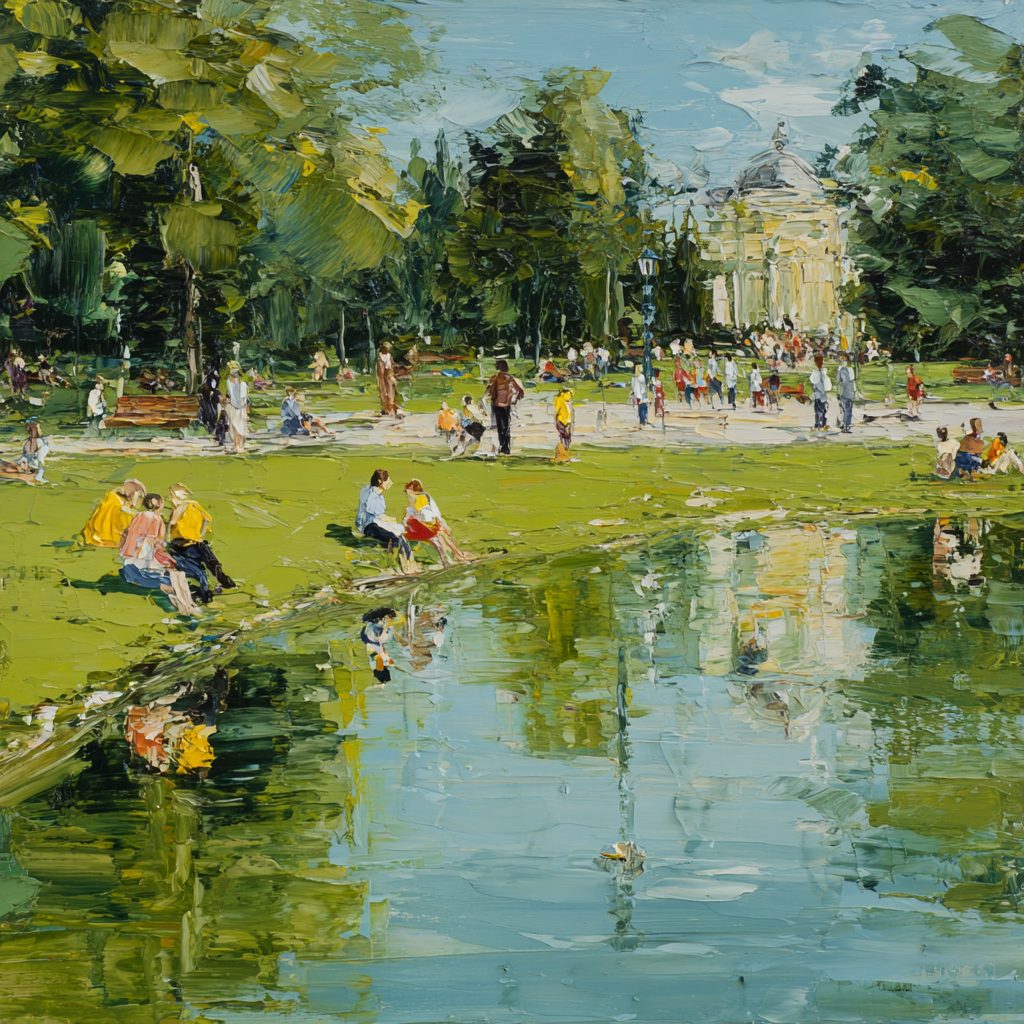
American cities keep investing in parks and still receiving failing grades. The conversation usually circles funding, maintenance, or public behavior, but those explanations stay close to the surface. Beneath them is something quieter and more structural: we keep trying to solve fundamentally different civic conditions with the same design assumptions.
A park in a floodplain, a dense urban neighborhood, an aging community, and a heat-stressed corridor are not the same problem wearing different clothes. Yet we often treat them as if they are.
This isn’t carelessness. It’s inheritance. Much of American park design still carries the logic of a 19th-century vision — open green space meant primarily for aesthetic respite — applied broadly even as our cities, climates, and social realities have changed. When outcomes fall short, we attribute the gap to funding or usage patterns, rarely to the mismatch between context and model.
Globally, we can see a different story unfolding. Cities like Vienna, Curitiba, and Singapore have each treated parks not as universal amenities but as precise tools, solving different civic needs through different mechanisms. Their successes aren’t accidental; they reflect an understanding that public space functions best when it is designed for the specific human and ecological conditions it serves.
The deeper lesson isn’t that one of these models is “best.” It’s that the idea of a single best model is the wrong starting point.
The triangle we rarely name
Every park quietly sits at the intersection of three realities:
- the people who maintain and steward it
- the public who use it
- the ecological systems it supports
When any one of these is treated as secondary, strain shows up somewhere else. Parks become underused, workers burn out or turn over, ecological potential is lost, and the public narrative shifts toward disappointment rather than possibility.
When all three are considered together, something different becomes possible. Parks begin to function less like decorative spaces and more like living infrastructure — stabilizing neighborhoods, supporting health, absorbing environmental stress, and creating places where a wider range of people feel they belong.
Why the system keeps repeating itself
Most municipal systems are structured to reward predictability. Procurement favors familiar specifications. Professional training reinforces established traditions. Budgets measure expense more easily than long-term return. Innovation carries visible risk, while repetition carries institutional safety.
Inside those conditions, replicating familiar park templates is understandable. It reduces uncertainty even if it quietly reproduces mediocre outcomes.
This is not a story about individual failure. It’s about a system selecting for what feels administratively safe rather than what is contextually effective.
Efficiency that counts the whole picture
We often talk about efficiency as if it simply means lower upfront cost. But when parks are designed without considering heat mitigation, flood absorption, accessibility, or inclusive use, cities pay elsewhere — through infrastructure strain, health costs, social fragmentation, and lost civic vitality.
When parks are treated as integrated infrastructure, the equation changes. Investments begin to return value through avoided costs, improved health outcomes, and more stable neighborhoods. Efficiency becomes less about minimizing expense and more about aligning design with real conditions over time.
What shifts when we design for reality
When park design begins with context rather than template, the changes are tangible.
Spaces feel usable across ages and abilities rather than dominated by a narrow set of activities. Ecological systems begin to support resilience rather than requiring constant correction. Workers gain clearer professional identity when their role is understood as managing living systems rather than simply maintaining grounds. Communities experience public space as something that supports daily life rather than something they visit occasionally.
None of this requires abandoning tradition. It requires expanding the lens through which decisions are made.
A different kind of infrastructure
What’s emerging globally is less a single solution than a different approach to choosing solutions. Instead of asking, “What park should we build?” the more useful question becomes, “What conditions are we trying to support, and which proven model fits those conditions?”
That shift sounds subtle, but it changes how decisions get made. It moves cities away from universal answers and toward informed matching — aligning design with demographic realities, climate risks, and community needs.
When that alignment happens, parks begin to function the way infrastructure is meant to function: reliably, inclusively, and with benefits that extend beyond the boundaries of the space itself.
The deeper promise
At their best, parks quietly express what a community believes about shared life. They signal whether public space is meant primarily for some or genuinely for many. They reveal whether ecological systems are treated as decorative backdrops or as partners in resilience. They show whether the people who care for public spaces are seen as custodians or as skilled stewards.
Designing parks with context in mind doesn’t just improve usage metrics. It reflects a broader civic maturity — an understanding that shared spaces work best when human dignity, ecological intelligence, and practical stewardship are held together.
DIALECTIC AND DECONSTRUCTION SOLUTIONS (DDS) BLUEPRINT
Problem: U.S. Urban Parks System Treats Universal Solution as Optimal When Context Demands Diverse Models
PHASE 1: PROBLEM FRAMING
The Umbrella Problem
U.S. urban parks receive D+ infrastructure grades despite billions invested, operating as isolated cost centers rather than integrated civic infrastructure, while proven global models (Vienna’s equity design, Curitiba’s flood containment, Singapore’s networked connectivity) demonstrate context-specific approaches that generate measurable returns through health outcomes, infrastructure savings, and ecosystem services.
The Multiple Drivers
- False universalism in park design (one-size-fits-all approach ignoring demographic, geographic, climate variation)
- Cost-center accounting (parks measured as expense rather than infrastructure investment with quantifiable returns)
- Maintenance worker devaluation (custodial labor rather than ecological engineering)
- Equity blindness in design (facilities favor aggressive users, exclude elderly/girls/disabled)
- Siloed infrastructure planning (parks separate from stormwater, transportation, public health systems)
- Absence of context-matching framework (no systematic process for adopting proven international models to appropriate U.S. contexts)
This Blueprint Addresses:
Absence of infrastructure and governance framework allowing U.S. municipalities to systematically identify, adapt, and implement context-appropriate park models from proven global analogs (Vienna, Curitiba, Singapore) based on local demographic, geographic, and fiscal conditions rather than defaulting to universal design.
Remaining Components:
This blueprint does not address federal/state funding structures for parks, property tax limitations restricting municipal revenue, or cultural resistance to public investment in “amenities.” These drivers require separate interventions.
Bounded Ambition Note:
This blueprint addresses park design and implementation infrastructure enabling context-appropriate model adoption. It does not attempt to resolve municipal fiscal constraints, state-level funding formulas, or cultural narratives around taxation, which require separate interventions.
PHASE 2: DECONSTRUCTION
The Surface Symptom
American cities build parks that get minimal use, require expensive maintenance, fail during climate events (flooding), and serve narrow demographics. Parks become crime magnets in some neighborhoods, elite amenities in others. Infrastructure grades remain D+ despite capital investment. Maintenance workers earn poverty wages while performing critical ecological work.
The False Start
“We need more park funding” or “Americans don’t value public space.”
The Compassionate Reality
U.S. park departments inherit 19th-century design paradigms (Central Park model: large passive green space for aesthetic contemplation) applied universally regardless of context. This isn’t incompetence—it’s path dependence. Landscape architecture programs train designers in singular tradition. Municipal procurement processes reward lowest-bid contractors following standardized specifications. Park directors face budget pressures making innovation risky—if experimental design fails, they’re blamed; if traditional design fails, it’s “normal.” Meanwhile, global models proving parks can serve as flood infrastructure (Curitiba), gender equity tools (Vienna), or public health interventions (Singapore) remain academically known but practically inaccessible. No systematic infrastructure exists for U.S. municipalities to assess which international model fits their specific conditions and how to adapt implementation.
The Upstream Drivers
Driver 1: Professional Path Dependence in Landscape Architecture
- Actors: University landscape architecture programs, professional associations (ASLA), municipal park departments
- Incentive/Constraint: Academic programs teach historical canon (Olmsted, Jensen, Eckbo); deviation risks accreditation; hiring departments seek familiar credentials
- Behavior: Design professionals apply learned templates regardless of demographic shifts, climate realities, or proven alternatives
- Loop: Universities train in traditional models → municipalities hire traditionally-trained designers → parks built to historical specifications → poor outcomes attributed to “insufficient funding” not design failure → no pressure on universities to update curriculum
Driver 2: Cost-Center Accounting Obscuring Value
- Actors: Municipal budget offices, city councils, taxpayer advocacy groups
- Incentive/Constraint: Parks appear on expense ledger with no revenue offset; competing needs (police, roads, schools) have clearer constituencies
- Behavior: Parks funded as discretionary amenities, first cut during fiscal pressure, measured by cost-per-acre rather than returns (health savings, flood damage prevention, property value increase)
- Loop: Parks treated as cost → maintenance deferred → quality degrades → utilization drops → reinforces perception parks are low-value expenditure → further cuts justified
Driver 3: Maintenance Worker Devaluation
- Actors: Municipal HR departments, park administrators, public sector unions
- Incentive/Constraint: Parks maintenance classified as “custodial” labor (low-skill, low-wage) rather than ecological infrastructure management (high-skill, technical)
- Behavior: Hire workers at minimum wage, provide minimal training, high turnover, poor working conditions
- Loop: Low wages attract transient workforce → minimal institutional knowledge → reactive maintenance (mow, empty trash) not proactive ecosystem management → parks degrade → reinforces view that maintenance is unskilled work
Driver 4: Design Equity Blindness
- Actors: Park planners, community engagement consultants, elected officials
- Incentive/Constraint: Public meetings dominated by vocal groups (youth sports advocates, dog owners); elderly, girls, disabled underrepresented in advocacy
- Behavior: Build facilities serving dominant users (soccer fields, dog parks, open lawns) while ignoring needs of silent constituencies
- Loop: Aggressive users claim space → elderly/girls withdraw → usage patterns reinforce dominant design → next park built to match “observed demand” → exclusion compounds
Driver 5: Siloed Infrastructure Planning
- Actors: Public works departments (stormwater, transportation), public health agencies, park departments
- Incentive/Constraint: Separate budget lines, different professional cultures (engineers vs. landscape architects), no coordination mandate
- Behavior: Build expensive gray infrastructure (concrete storm sewers) while missing opportunity to use parks for flood containment; plan bike infrastructure separately from park connector networks; fund diabetes prevention programs while ignoring park access
- Loop: Siloed planning → redundant expensive infrastructure → parks remain isolated cost centers → each department defends budget → integration never happens
The Entry Point
The lever is systematic context-matching infrastructure. U.S. municipalities need structured process for: (1) assessing local conditions (demographics, climate, fiscal capacity, existing infrastructure gaps), (2) identifying which proven international model fits those conditions, (3) accessing adaptation protocols showing how to implement that model in U.S. regulatory/cultural context. The solutions exist—Vienna’s gender-equity design, Curitiba’s flood parks, Singapore’s therapeutic gardens—but remain inaccessible because no translation mechanism exists. Create National Parks Innovation Network providing municipalities with context assessment tools, model library, adaptation playbooks, and peer learning infrastructure. Not imposing single model but enabling informed matching of solutions to contexts.
PHASE 3: DIALECTICS
The Core Tension
EFFICIENCY ↔ HUMANITY (Optimization ↔ Dignity)
Secondary Tensions:
- INNOVATION ↔ TRADITION (Progress ↔ Continuity)
- INDIVIDUAL ↔ COLLECTIVE (Autonomy ↔ Belonging)
The Weighting
Current State: 70% Efficiency (Cost-Minimization) / 30% Humanity (Equity/Quality)
Target State: 45% Efficiency / 55% Humanity
Who Benefits: Elderly, girls, disabled populations gain usable public space; municipalities gain infrastructure savings (flood prevention, health outcomes); maintenance workers gain professional recognition and wages; climate-vulnerable neighborhoods gain resilience
Who Bears Cost: Traditional landscape architecture profession faces credential disruption; aggressive park users (youth sports coalitions) lose exclusive space claims; municipal budget offices must learn value-accounting beyond cost-per-acre; contractors lose standardized-specification advantage
What’s Sacrificed: False efficiency of cheapest-upfront design; professional prestige of universal design approach; simplicity of single procurement standard; comfort of blaming “insufficient funding” rather than addressing design failure
Dialectical Narrative
Parks currently optimize for cost minimization. Cheapest design per acre. Lowest maintenance labor expense. Minimal capital investment. This appears efficient on annual budget but obscures massive hidden costs: emergency room visits for heat-related illness in neighborhoods without tree canopy, flood damage from inadequate stormwater absorption, property value depression in areas with degraded parks, lost economic productivity from preventable diabetes and cardiovascular disease. True efficiency accounts for these downstream consequences. Curitiba’s flood parks cost more upfront than traditional playgrounds but save millions in avoided flood damage. Vienna’s equity-designed parks serve broader population, generating higher utilization rates and health returns. Singapore’s therapeutic gardens reduce healthcare utilization measurably.
We arrived at 70/30 through comprehensible pressures. Municipal fiscal crisis in 1970s-80s forced cost-cutting. Parks became targets because benefits are diffuse (property values, health, climate resilience) while costs are concentrated (budget line item). Professional culture reinforced efficiency bias—landscape architects trained to “do more with less” rather than “generate measurable returns.” Equity considerations felt like luxury when basic maintenance struggled. Meanwhile maintenance workers, often immigrants or returning citizens, lacked political power to demand reclassification from custodial to technical labor despite performing complex ecological management.
The cost of staying at 70/30 is compounding. Heat islands intensify in low-canopy neighborhoods. Flooding worsens as climate changes but parks lack absorption capacity because they weren’t designed for stormwater function. Girls withdraw from public space after age 10 because open fields get claimed by aggressive users and no alternative spaces exist. Elderly stay isolated because parks lack seating, shade, accessible paths. Maintenance quality degrades as skilled workers leave for better wages. Each failure reinforces narrative that “parks are nice-to-have amenities” rather than critical infrastructure.
Target of 45/55 doesn’t abandon efficiency. Cost matters. Budget constraints are real. But efficiency measured only as expense-minimization misses that well-designed parks generate returns exceeding investment. Rebalancing to humanity-as-dignity means parks designed for actual diverse human use, maintenance workers paid as ecological engineers, value measured through health outcomes and infrastructure savings rather than only cost-per-acre. In practice: Vienna model for demographically diverse urban neighborhoods, Curitiba model for flood-prone areas, Singapore model for aging populations needing therapeutic spaces. Match solution to context rather than imposing universal design.
Who bears the cost? Landscape architecture profession must update credentials—learning gender-equity design, climate adaptation, public health outcomes rather than only aesthetic tradition. Aggressive park users (typically youth sports coalitions) lose exclusive claim to space—soccer fields remain but must share with seating nooks, therapeutic gardens, multigenerational facilities. Municipal budget offices must develop value-accounting capacity showing parks as infrastructure investment not amenity expense. Contractors lose advantage of standardized specs—context-appropriate design requires local adaptation, competitive bidding becomes more complex. These aren’t trivial costs. Professional identities and business models rest on current structure. But alternative is continued infrastructure failure while pretending we can’t afford better.
PHASE 4: THE MECHANISM
Title: National Parks Innovation Network (NPIN)
Strategy: Create federally-supported nonprofit providing U.S. municipalities with context assessment tools, proven international model library, adaptation playbooks, and peer learning infrastructure to systematically match park design approaches (Vienna equity, Curitiba flood containment, Singapore therapeutic networks) to local demographic, geographic, and fiscal conditions.
Action Steps
Step 1: Context Assessment Framework
Develop standardized diagnostic tool municipalities use to profile local conditions across six variables: (1) Demographics—age distribution, gender equity gaps, disability prevalence, (2) Climate—flood risk, heat island severity, drought patterns, (3) Infrastructure gaps—stormwater capacity deficits, transportation connectivity, public health utilization, (4) Fiscal capacity—bond rating, existing park budget, revenue flexibility, (5) Land availability—vacant lots, underutilized spaces, infrastructure corridors, (6) Political readiness—community organizing capacity, elected official support, existing equity frameworks. Tool generates “Context Profile” showing which international models best match local conditions. Free web platform with technical assistance for smaller municipalities lacking analytical capacity.
Rationale: Matching solutions to contexts requires making context legible. Most municipalities lack frameworks to assess their own conditions systematically. Assessment tool translates complex local reality into comparable variables, enabling pattern-matching to proven models. Like medical diagnostic creating treatment protocol based on patient-specific factors rather than universal prescription.
Step 2: Model Library and Adaptation Playbooks
Curate detailed implementation guides for proven international park models: Vienna’s gender-equity design (sociotope mapping, lighting standards, nook-versus-field ratios), Curitiba’s flood containment parks (basin engineering, native plantings, multi-use programming), Singapore’s therapeutic gardens (ADHD/dementia-specific design, clinical outcome measurement, arborist training protocols). Each playbook includes: design specifications, regulatory adaptation (translating international standards to U.S. codes), procurement language, workforce development requirements, cost-benefit analysis methodology, case studies from early U.S. adopters. Library maintained by NPIN, updated annually as new models prove effectiveness.
Rationale: Solutions exist globally but remain practically inaccessible because implementation knowledge siloed in academic journals, foreign-language documents, professional networks. Playbooks translate international innovation into executable local action. Removes barrier where municipal staff know Vienna’s model works but don’t know how to procure it, train for it, or measure outcomes under U.S. conditions.
Step 3: Peer Learning Cohorts and Technical Assistance
Organize municipalities into regional cohorts (8-12 cities) implementing similar models. Quarterly convenings (virtual + annual in-person) for knowledge exchange, troubleshooting, contractor/vendor sharing. NPIN provides embedded technical assistance—landscape architects, civil engineers, public health researchers—for pilot implementations. Create “Twinning” partnerships between U.S. cities and international originators (Denver + Vienna, Houston + Curitiba, Portland + Singapore) enabling direct knowledge transfer. Document lessons learned, update playbooks based on field experience, celebrate successful adaptations publicly to build political will elsewhere.
Rationale: Implementation fails not from bad design but from isolated execution. First-mover cities bear all learning costs, make expensive mistakes, abandon promising approaches when obstacles emerge. Cohort model socializes learning—when Houston discovers procurement language that works for flood parks, shares with Miami and New Orleans facing similar challenges. Twinning partnerships provide expert guidance reducing expensive trial-and-error.
The Leadership
Steward: National Parks Innovation Network (NPIN)—501(c)(3) nonprofit governed by board representing municipal park directors (urban + rural), landscape architecture academics, public health researchers, climate adaptation experts, equity advocacy organizations. Executive Director with dual expertise (landscape architecture + municipal management).
Facilitator: Urban Land Institute’s Parks and Public Spaces Initiative—manages cohort coordination, convening logistics, international partnership development, fundraising from philanthropic sources.
These roles fit because NPIN requires technical credibility (landscape architecture, civil engineering, public health) plus municipal operational understanding (procurement, budgeting, workforce development). Nonprofit structure protects from federal political shifts. ULI has existing infrastructure for multi-city coordination and international partnerships, plus relationship with real estate sector that benefits from park-driven property value increases.
The Timeline
Phase 1 (Infrastructure Development): Months 1-18
Build context assessment platform. Develop first three model playbooks (Vienna, Curitiba, Singapore). Recruit founding board. Establish nonprofit legal structure. Secure initial philanthropic funding ($5M). Launch pilot with 10 municipalities representing geographic/demographic diversity (dense urban, suburban, small city, climate variation). Provide intensive technical assistance for pilot cohort.
Phase 2 (Pilot Implementation): Months 19-42
Pilot cities begin park projects using matched models. Document challenges, adaptation requirements, cost realities, community response. NPIN staff embedded providing technical support, troubleshooting procurement, connecting to international expertise. Quarterly cohort convenings. Conduct rigorous evaluation measuring outcomes (utilization rates by demographic, flood damage reduction, health metrics, maintenance costs, worker retention).
Phase 3 (Expansion and Refinement): Months 43-60
Based on pilot learnings, refine playbooks. Expand to 50 municipalities across second cohort. Add three additional model playbooks based on emerging innovations. Launch workforce development component—training curriculum for “Ecological Infrastructure Technician” credential recognizing park maintenance as skilled work. Establish revenue sustainability through membership fees (large cities), API licensing (vendors using NPIN specifications), conference revenue.
Phase 4 (Scale and Integration): Months 61+
Network reaches 200 municipalities. NPIN playbooks become recognized standards influencing landscape architecture accreditation, municipal procurement defaults, federal grant requirements. State-level affiliates emerge. Integration with federal infrastructure programs (EPA stormwater grants require park-based solutions, HHS healthy communities funding prioritizes park access, DOT Complete Streets includes park connector networks). Model becomes self-sustaining through membership and technical assistance fees.
The Cost Analysis
Financial Cost:
- Network establishment: $5M (nonprofit incorporation, platform development, initial playbook creation)
- Annual operations: $12-15M (staff salaries, technical assistance, cohort convenings, international partnerships, platform maintenance)
- Pilot city grants: $20M total ($2M per city for first implementations demonstrating models)
- Workforce development: $3M (curriculum development, credentialing infrastructure, instructor training)
- Total: $40-43M over first 5 years
Revenue sources: Philanthropic (Bloomberg, Kresge, Knight Foundations funding urban innovation), federal grants (EPA stormwater, HHS healthy communities, DOT active transportation), membership fees from participating municipalities (sliding scale by budget size), eventual self-sustainability through technical assistance contracts and vendor licensing.
Opportunity Cost:
Resources go to park innovation infrastructure instead of direct park construction funding, other municipal technical assistance (affordable housing, transit, economic development), or expanded federal park service programs. Attention goes to international model adoption rather than domestic innovation development. Risk is building translation infrastructure when municipalities may prefer direct capital grants—though capital without design innovation perpetuates current failure patterns.
Human Cost:
Municipal park directors absorb learning new frameworks, procurement approaches, outcome measurement—adds complexity to already-stretched capacity. Landscape architects face professional disruption as credentials shift from aesthetic design to public health/climate adaptation outcomes. Maintenance workers experience reclassification benefits (higher pay, professional recognition) but also increased performance expectations. Contractors must adapt to context-specific specifications rather than universal standards. Community members engage in more intensive planning processes (sociotope mapping, equity audits) requiring time and sustained participation.
Key Assumptions
- Assumption 1: Municipalities will adopt international models if adaptation is simplified
If wrong: Playbooks exist but remain unused; cultural resistance to “foreign solutions” stronger than assumed; must invest more in domestic demonstration projects showing models work in U.S. contexts before promoting international adoption - Assumption 2: Context assessment tool can objectively match conditions to models
If wrong: Tool produces poor matches; municipalities implement inappropriate designs; must add human consultation layer where NPIN staff review assessment results before recommending models - Assumption 3: Maintenance worker reclassification will improve recruitment and retention
If wrong: Higher wages attract workers but job remains unappealing due to outdoor conditions, physical demands, lack of career progression; must develop broader workforce development infrastructure including supervision pathways, management training - Assumption 4: Parks designed as infrastructure will demonstrate measurable returns
If wrong: Flood reduction, health outcomes, property values don’t materialize at predicted levels; cost-benefit analysis doesn’t justify investment; must either accept that parks are amenities worth funding for intrinsic value, or acknowledge specific models don’t translate to U.S. contexts - Assumption 5: Peer learning cohorts will share knowledge rather than compete
If wrong: Cities hoard innovations, resist collaboration, use NPIN primarily for grant funding not learning; must create stronger incentives for knowledge sharing (recognition, additional funding for documented teaching) - Assumption 6: Philanthropic funding can sustain network until membership fees viable
If wrong: Foundations provide seed funding but don’t maintain support through scale-up phase; network collapses before reaching sustainability; must secure federal appropriation or pursue earlier revenue generation through vendor partnerships
The Evidence
Primary Analog 1: Vienna Gender-Mainstreaming in Urban Planning (1991-present)
Sociotope mapping revealed gender disparities in park utilization. Redesigned 1,000+ parks incorporating lighting, seating, diverse activity zones. Measured outcomes: girls’ park usage rates increased 40%, elderly visitation up 35%, maintenance vandalism decreased 60%. Model now standard across Austrian municipalities.
Primary Analog 2: Curitiba Flood Parks (1970s-present)
Converted floodplain areas into multi-use parks with designed overflow basins. Avoided $50M in concrete drainage infrastructure. During 2014 floods, park system absorbed 80% of excess stormwater preventing widespread property damage. Green Exchange program keeps parks clean through community stewardship—200,000 tons waste exchanged annually.
Primary Analog 3: Singapore Park Connector Network (1990-present)
Built 390km of connected green corridors using underutilized spaces (road medians, drainage channels, rooftops). 90% of residents live within 10-minute walk of park. Therapeutic garden initiative (30+ sites) shows measurable health outcomes: ADHD children in therapeutic garden programs demonstrate 25% improvement in attention metrics, dementia patients show reduced behavioral symptoms.
Theoretical Basis for Adaptation: Innovation Diffusion Theory (Rogers—adoption requires relative advantage, compatibility, trialability, observability) predicts international models will diffuse when adapted to local contexts through structured knowledge transfer. Public Health Infrastructure Theory demonstrates parks as preventive health intervention cost-effective compared to downstream treatment. Ecological Economics shows natural infrastructure (green stormwater management) often cheaper than gray infrastructure (concrete systems) over lifecycle.
Why These Apply: Vienna demonstrates equity-based design produces measurable utilization and safety improvements across demographics—transferable to U.S. cities with similar diversity. Curitiba shows parks-as-infrastructure generates quantifiable fiscal returns through avoided costs—applicable to any flood-prone municipality. Singapore proves network connectivity and therapeutic design create health outcomes—relevant given U.S. aging population and public health crisis. Combined evidence suggests models work across contexts when properly adapted.
The Emotional Consequence
Relief Profile:
Elderly residents experience parks as welcoming rather than exclusionary when seating, shade, and accessible paths exist. Girls continue using public space through adolescence when nooks and lighting provide safety from aggressive users. Maintenance workers feel professional recognition when reclassified as Ecological Infrastructure Technicians with corresponding wages and respect. Municipal park directors gain confidence—the tools exist to design parks that actually work, not just repeat historical failures. Climate-vulnerable neighborhoods experience tangible resilience as flood parks prevent property damage. The relief isn’t euphoria but the grounded experience of infrastructure functioning as designed—parks that serve actual diverse populations, generate measurable returns, employ workers with dignity.
Burden Profile:
Traditional landscape architects face credential disruption—aesthetic design mastery insufficient, must learn gender equity frameworks, climate adaptation engineering, public health outcome measurement. Some will experience this as devaluation of hard-won expertise. Youth sports coalitions lose exclusive space claims when fields must share with multigenerational facilities—the sense that “we earned this through organizing” gets challenged by equity frameworks showing their advocacy excluded others. Municipal budget offices must develop new analytical capacity—value accounting for health savings and infrastructure returns rather than simple cost-per-acre, requires staff training and methodology shifts. Contractors habituated to universal specifications face complexity of context-appropriate design—competitive advantage shifts from scale to adaptation capacity. The burden is being asked to see that what felt like competence (following established practice) was actually reproducing failure, and that genuine competence requires learning new frameworks.
Feasibility Check
Authority & Hiring
- Who has power to create Steward/Facilitator roles?
NPIN: Created through nonprofit incorporation, requires founding board recruitment and 501(c)(3) application. ULI: Existing organization expands Parks Initiative through internal restructuring. - If new positions: What budget line? What department?
NPIN funded through philanthropic grants initially (Bloomberg, Kresge, Knight Foundations). Federal support potentially through EPA, HHS, DOT grants to nonprofit. Not federal agency—independent nonprofit structure. - If existing positions: What gets deprioritized?
ULI Parks Initiative currently focuses on economic development benefits of parks; absorbs technical assistance and cohort coordination by reducing bandwidth on other activities. Municipal park directors joining network absorb NPIN participation into existing roles (shifts time from routine administration to strategic planning and peer learning).
Enforcement Teeth
- What happens if Steward doesn’t follow through?
NPIN Board can remove Executive Director through majority vote. Philanthropic funders withdraw support if methodology compromised or outcomes not demonstrated. Participating municipalities can exit network if technical assistance insufficient. - What leverage does Facilitator have when stakeholders resist?
ULI has convening authority and real estate sector relationships but limited coercive power. Relies on reputational incentives—municipalities refusing participation get identified publicly. Can condition membership benefits on knowledge sharing requirements. - Who can cancel program if it fails?
NPIN Board (nonprofit governance). Philanthropic funders through grant termination. Federal agencies if using federal grants. Participating municipalities through collective exit (if network loses critical mass, becomes unsustainable).
Coordination Reality
- How many meetings per month?
NPIN Board: quarterly. Model development working groups: monthly. Regional cohorts: monthly virtual + quarterly in-person. International partnership coordination: bi-monthly. Total: approximately 20-25 coordination meetings monthly at national level. - What existing meeting/committee gets replaced or absorbed?
Municipal park directors already attend professional conferences (NRPA, ASLA)—NPIN cohorts integrate into existing gathering rhythms rather than adding parallel structure. Landscape architecture academics already convene through research networks—NPIN creates applied panel within existing structures. - Who owns shared data/reporting system?
NPIN maintains context assessment platform and outcome database. Participating municipalities retain ownership of local data but grant NPIN rights to publish aggregated anonymized findings. Playbooks and model specifications openly published for broad adoption.
Decision Authority
- Who makes final call when conflict arises?
Methodology disputes: NPIN Board (supermajority required for playbook changes). Municipal implementation: Local park director retains final authority (NPIN advisory not directive). Cohort participation standards: ULI Facilitator in consultation with cohort members. - What’s escalation pathway if mechanism stalls?
Philanthropic funders demand independent evaluation → Board reconstitutes leadership → If municipalities not adopting models, either playbooks insufficient (revise based on barriers identified) or demand doesn’t exist (acknowledge municipalities prefer traditional approaches, repurpose to research/documentation role) - Where does budget authority sit?
NPIN Board controls nonprofit finances. Philanthropic foundations control grant awards. Municipal park departments control local implementation budgets. Federal agencies control any government grants to NPIN or participating cities.
PHASE 5: READINESS & AUDIT
Readiness Scores
Psychological/Social Capacity: 7/10
Park innovation less politically charged than many civic issues—no culture war dynamics, broad constituency support for “better parks.” International model adoption requires professional humility (acknowledging U.S. doesn’t have monopoly on good design) but growing awareness of climate/equity crises creates openness. Main psychological barrier is maintenance worker reclassification—challenges deeply-held assumptions about skill hierarchy. Overall: receptive environment if framed as practical problem-solving rather than ideological shift.
Political/Institutional Alignment: 6/10
No federal agency creation needed (nonprofit structure). Bipartisan appeal—conservatives appreciate fiscal returns (flood damage prevention), progressives value equity outcomes (serving marginalized populations). Philanthropic funding available from urban innovation foundations. Federal grant alignment possible through existing programs (EPA stormwater, HHS healthy communities, DOT Complete Streets). Main institutional barrier: municipal park departments already under-resourced may resist adding new frameworks to workload. Landscape architecture professional associations may resist credential disruption. Moderate political feasibility—has support but requires coalition-building across sectors.
Operational/Resource Feasibility: 8/10
Context assessment tool technically straightforward—web platform, database, algorithmic matching. Playbook development requires expertise but capacity exists (international practitioners, U.S. academics, municipal innovators). Cohort coordination operationally established practice (many existing models in other sectors). Main operational challenge: ensuring technical assistance quality when scaling beyond pilot—requires growing cadre of trained consultants familiar with diverse models. Overall: highly feasible operationally given existing capabilities and proven components.
Cultural/Existential Fit: 7/10
Aligns with American pragmatism (adopt what works regardless of origin), evidence-based policy movement, climate adaptation urgency, equity consciousness in urban planning. Tensions with American exceptionalism (resistance to learning from abroad) and professional guild protection (landscape architects defending credentials). Younger generations more comfortable with international knowledge transfer, data-driven design, social equity frameworks. Cultural fit strong among urban progressives, moderate among suburban pragmatists, weaker among rural traditionalists. Geographic and demographic variation in receptivity requires context-sensitive rollout.
Average Readiness: 7.0/10 (High)
Readiness Interpretation:
Ready for immediate pilot implementation with high probability of success. All necessary components exist—proven international models, technical capacity for adaptation, philanthropic funding, municipal demand, operational infrastructure. No major structural barriers requiring system redesign. Primary risks are execution-related (quality of playbooks, effectiveness of technical assistance, sustainability of funding) rather than fundamental feasibility. Pathway is aggressive but achievable pilot with 10 diverse municipalities, rigorous evaluation, rapid iteration based on learnings, scale to broader network within 3-5 years.
Fractal Audit (New Problem This Creates):
Model Misapplication Through Superficial Matching:
Context assessment tool may match municipalities to models based on surface characteristics (flood risk → Curitiba model) without deeper cultural/political/institutional compatibility assessment. City adopts “Curitiba flood parks” but lacks community organizing capacity for Green Exchange program, authoritarian procurement process enabling rapid implementation, or cultural relationship to public space supporting high utilization. Results: expensive infrastructure built but doesn’t function as designed. Key components missing, outcomes don’t materialize, creates backlash against international model adoption generally.
Professional Fragmentation and Credential Wars:
As landscape architecture profession splits between traditional practitioners (aesthetic design) and innovation adopters (equity/climate/health design), creates hostile professional environment. Traditional firms lose municipal contracts to specialized equity consultants. Professional associations fracture over accreditation standards. Universities caught between preparing students for existing market versus emerging needs. Young professionals face uncertain career pathways—invest in traditional credentials or bet on innovation framework? Fragmentation undermines collective professional power just when climate crisis requires coordinated expertise.
Equity Model Becomes New Form of Exclusion:
Vienna-style gender-equity design succeeds in progressive cities with strong equity infrastructure but fails in conservative municipalities lacking social services integration, trained facilitators, or political will for sustained equity auditing. Over time, creates two-tier park system: progressive cities with sophisticated equity design serving diverse populations, conservative cities with traditional design continuing to exclude. Geographic inequality in park quality maps onto existing political polarization, potentially intensifying rather than reducing disparities.
Maintenance Reclassification Creates Labor Market Disruption:
Elevating park maintenance to “Ecological Infrastructure Technician” with higher wages improves conditions for workers who can meet new credential requirements but potentially displaces existing workforce lacking formal education or English proficiency. Creates perverse outcome where equity-focused park reform harms the very communities (immigrants, returning citizens) currently employed in maintenance roles. Requires parallel investment in workforce development, apprenticeships, credential pathways accessible to current workers—but these often neglected in rush to professionalize.
Success Metrics (Kill Switch):
If after 3 years of pilot implementation:
- Participating municipalities have not demonstrated 30%+ increase in park utilization rates across diverse demographics (elderly, girls, disabled) compared to baseline, OR
- Flood containment parks fail to demonstrate measurable reduction in stormwater infrastructure costs or property damage compared to gray infrastructure alternatives, OR
- Maintenance worker reclassification fails to improve retention rates or job satisfaction (measured through surveys and turnover data), OR
- Cost-benefit analyses show park investments not generating positive returns through health savings, property values, infrastructure cost avoidance, OR
- Participating municipalities abandon models after pilot period (indicating unsustainability), OR
- Playbook adoption remains limited to wealthy progressive cities (indicating model doesn’t transfer across diverse U.S. contexts),
THEN: Discontinue expansion, conduct independent evaluation of why proven international models failed to translate to U.S. implementation, either redesign adaptation protocols addressing identified barriers (cultural, regulatory, fiscal) or acknowledge that U.S. municipal capacity insufficient for sophisticated park innovation, requiring different intervention approach (direct federal park construction, simplified universal standards rather than context-matching, or accepting parks as amenities rather than infrastructure).
PHASE 6: NARRATIVE SYNTHESIS
American cities receive D+ grades on park infrastructure despite billions invested. The problem isn’t funding scarcity—it’s design failure. We keep building parks using 19th-century templates (large passive green space for aesthetic contemplation) regardless of demographic reality (aging population needing therapeutic spaces), climate conditions (flooding requiring absorption capacity), or equity gaps (girls withdrawing from public space after age 10). Meanwhile, proven models exist globally demonstrating parks can serve as flood infrastructure generating measurable fiscal returns, equity tools creating inclusive public space, and public health interventions reducing healthcare costs. These solutions remain practically inaccessible because no systematic infrastructure exists for U.S. municipalities to identify which model fits their context and how to implement it.
The false universalism is path dependence, not incompetence. Landscape architecture programs teach singular design tradition. Municipal procurement rewards standardized specifications. Park directors face budget pressure making innovation risky. The system selects for replication of known approaches even when those approaches demonstrably fail. Vienna’s gender-equity design shows how sociotope mapping and lighting standards increase girls’ park usage 40%. Curitiba’s flood containment parks save millions in avoided infrastructure costs while creating recreational space. Singapore’s therapeutic gardens produce measurable health outcomes for ADHD and dementia populations. But this knowledge remains trapped in academic journals and international professional networks—no translation mechanism connecting proven innovation to local implementation capacity.
The dialectical tension is efficiency versus humanity, but here humanity means dignity and equity rather than just compassion. Current 70/30 weighting toward cost minimization appears efficient on annual budgets but obscures massive hidden costs: emergency room visits for heat illness in low-canopy neighborhoods, flood damage from inadequate stormwater absorption, preventable chronic disease from inadequate physical activity infrastructure. True efficiency accounts for lifecycle returns. Parks designed as infrastructure generate quantifiable benefits exceeding upfront investment. Rebalancing to 45/55 means measuring value through health savings and infrastructure cost avoidance rather than only expense-per-acre.
The mechanism is National Parks Innovation Network—nonprofit providing context assessment tools, proven model library, adaptation playbooks, and peer learning cohorts. Municipalities diagnose local conditions (demographics, climate, infrastructure gaps, fiscal capacity), identify which international model best matches, access detailed implementation guides showing how to adapt that model to U.S. regulatory and cultural context. Not imposing universal solution but enabling informed matching. Vienna model for diverse urban neighborhoods with gender equity gaps. Curitiba model for flood-prone areas with stormwater infrastructure deficits. Singapore model for aging populations needing therapeutic spaces.
The readiness is high—all necessary components exist. Proven models, technical adaptation capacity, philanthropic funding, municipal demand, operational infrastructure. Primary risks are execution-related (playbook quality, technical assistance effectiveness, funding sustainability) rather than fundamental feasibility. The pathway: aggressive pilot with 10 diverse municipalities, rigorous evaluation measuring utilization rates, infrastructure savings, health outcomes, rapid iteration based on learnings, scale to 200 municipalities within 5 years.
The fractal audit warns about misapplication through superficial matching, professional fragmentation over credential shifts, equity models creating new geographic disparities, and maintenance reclassification displacing current workforce. These signal where attention must go during implementation—ensuring context assessment includes cultural and institutional variables not just demographic/climate data, managing professional transition to avoid hostile fragmentation, building workforce development alongside reclassification to avoid displacing current workers.
This blueprint protects fundamental democratic good: the right to public space that actually serves diverse populations rather than only dominant users. It assumes mixed motives—that municipal park directors want better outcomes but lack tools, that landscape architects defend credentials out of professional survival not malice, that maintenance workers deserve recognition as skilled practitioners managing complex ecological systems. It preserves dignity by framing design failure as systemic constraint not individual incompetence, and by elevating labor currently devalued.
The human cost of current system is invisible but massive. Girls abandoning public space in adolescence. Elderly isolated because parks lack accessible features. Neighborhoods flooding because parks weren’t designed for stormwater absorption. Workers performing skilled ecological management at poverty wages. Communities experiencing preventable chronic disease from inadequate activity infrastructure. The cost of intervention is concentrated and visible—network infrastructure, playbook development, technical assistance, pilot funding. The benefit is diffuse and long-term—parks that serve actual populations, infrastructure that generates measurable returns, workers employed with dignity, communities resilient to climate impacts.
Whether this succeeds depends less on technical elegance than on professional and political willingness to acknowledge current approaches fail and proven alternatives exist. Making international innovation accessible requires humility—admitting U.S. doesn’t monopolize good design, that Vienna and Curitiba and Singapore solved problems we’re still struggling with. The pilot tests whether that humility can coexist with American pragmatism (“adopt what works regardless of origin”). If outcomes demonstrate context-matched models outperform traditional design, political case for broader adoption strengthens. If municipalities resist despite accessible playbooks and technical support, we learn that path dependence runs deeper than information barriers and system requires different intervention—perhaps federal mandates, or accepting that park innovation happens generationally as new professionals replace entrenched practice. Either way, we stop pretending universal design serves diverse contexts and start building infrastructure for systematic context-matching.
PHASE 7: COMPONENT STATUS
Fully Specified:
- Umbrella problem and active driver clearly distinguished (false universalism in park design vs. context-appropriate model adoption)
- Five upstream drivers with complete actor/incentive/behavior/loop structure
- Primary dialectical tension (Efficiency ↔ Humanity) with current and target weightings
- Secondary tensions (Innovation ↔ Tradition, Individual ↔ Collective) named
- Three-part mechanism (Context Assessment, Model Library, Peer Learning) with action steps and rationales
- Leadership structure defined (NPIN as Steward, ULI as Facilitator)
- Timeline across four phases with specific activities
- Comprehensive cost analysis including financial, opportunity, and human costs
- Six key assumptions with falsification conditions
- Evidence from three primary analogs (Vienna, Curitiba, Singapore) with specific outcomes
- Theoretical basis (Innovation Diffusion, Public Health Infrastructure, Ecological Economics)
- Emotional consequences mapped for relief and burden profiles
- Complete Feasibility Check answering authority, enforcement, coordination, and decision questions
- Readiness scores across four dimensions with interpretation (7.0/10 average = High)
- Four fractal audit items identifying downstream problems
- Kill switch conditions specified with measurable thresholds
Needs Iteration:
- Context assessment algorithm specifications (weighting factors across six variables, validation methodology)
- Detailed playbook structure (template showing sections, depth, format for Vienna/Curitiba/Singapore models)
- Peer learning cohort facilitation protocols (meeting agendas, knowledge sharing mechanisms, conflict resolution)
- Workforce development curriculum details (Ecological Infrastructure Technician credential requirements, training modules, career pathways)
- Outcome measurement protocols (standardized metrics for utilization, health savings, infrastructure returns, equity indicators)
- Sustainability business model (membership fee structure, technical assistance pricing, vendor licensing terms)
- International partnership legal frameworks (knowledge transfer agreements, intellectual property, liability)
Open Questions:
- Can context assessment tool objectively match conditions to models without requiring expensive human consultation layer?
- Will landscape architecture professional associations support credential evolution or resist defending traditional practice?
- Does maintenance worker reclassification improve conditions for current workforce or displace them with credentialed newcomers?
- Are philanthropic funders willing to sustain network through 5-year scale-up period before membership revenue viable?
- Can playbooks successfully translate international models to U.S. regulatory contexts (ADA compliance, procurement law, union requirements, environmental review)?
- Should network remain national nonprofit or establish state/regional affiliates for closer municipal relationships?
- How to prevent model adoption becoming performative (cities claim “Vienna model” without implementing sociotope methodology)?
PHASE 8: HOW WOULD YOU LIKE TO PROCEED?
[A] Publish This Blueprint (Mark component complete)
[B] Solve Next Component (Begin blueprint for next driver—could address municipal fiscal constraints, landscape architecture curriculum reform, federal park funding structures, or cultural narratives around taxation)
[C] Revise This Blueprint
- Deconstruction (Change entry point—focus on professional credentialing rather than model translation infrastructure, or target federal funding formulas)
- Dialectics (Shift weighting or add tensions—could emphasize Innovation ↔ Tradition more heavily around professional resistance, or Transparency ↔ Privacy around community data collection in equity audits)
- Mechanism (Design different solution / alternative mechanism—federal mandate requiring context-appropriate design in grant applications, direct federal park construction bypassing municipal capacity, regulatory approach rather than voluntary network)
- Feasibility (Strengthen implementation grounding—specify context assessment algorithm, detail workforce development curriculum, design sustainability business model)
- Narrative (Adjust tone or emphasis—less focus on international models, more emphasis on domestic innovation, or center climate resilience framing over equity)
[D] Clarify Before Proceeding (Ask me questions)
[E] Start Fresh (New umbrella problem)
This blueprint was produced with Dialectic and Deconstruction Solutions (DDS), a method created by William Hambleton Bishop. The method, the book, and the public archive of worked blueprints are free at SolveSomething.com.