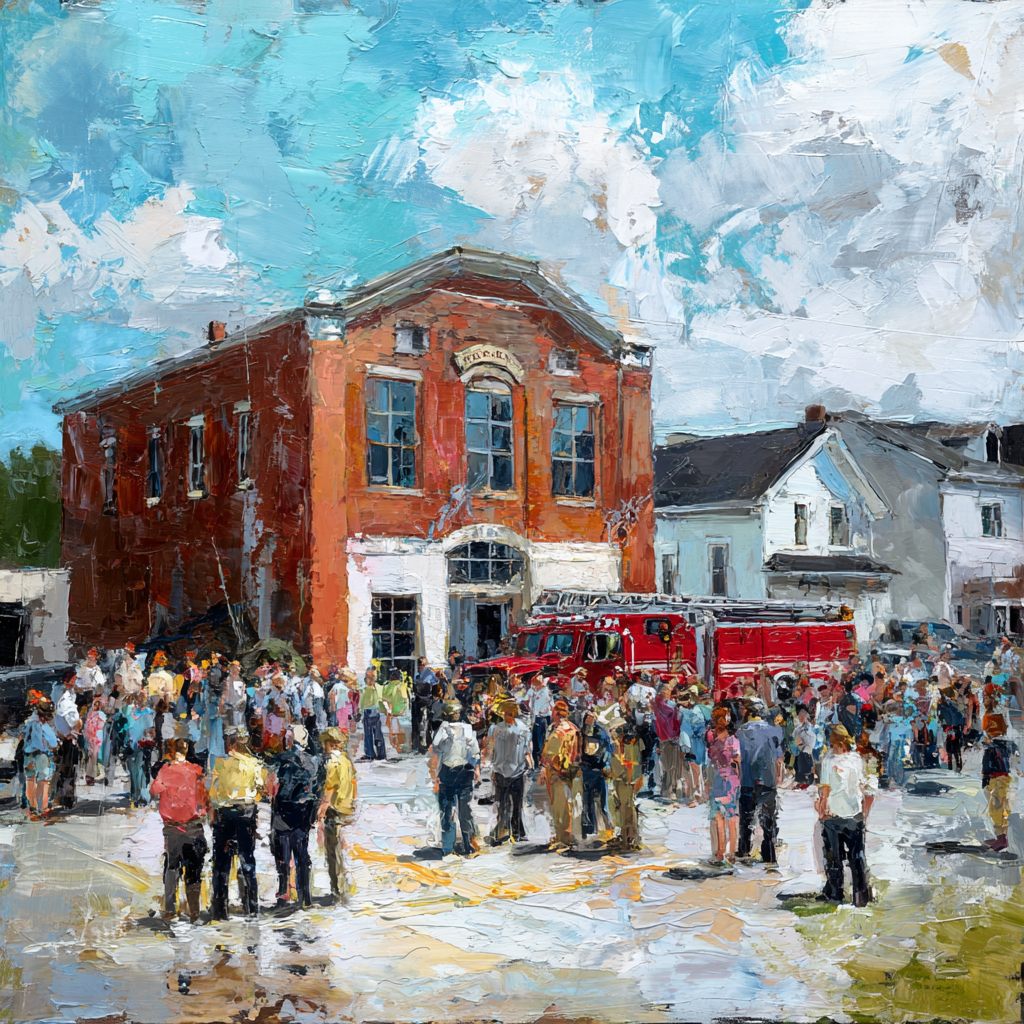
Essential services require universal access without surrendering accountability. This framework pairs a guaranteed public floor with competitive delivery—so providers cannot profit from neglect and failure remains actionable.
The argument is usually framed as a choice between government guarantees and market discipline. The harder reality is that we need both—and we keep building systems that deliver neither.
By The Dialectic and Deconstruction Solutions Framework
A rural county can lose its only bus route and still be told the market is working. A person with a disability can spend months proving they are still disabled and be told the paperwork protects fairness. A defense program can run billions over budget and still continue because no one can tolerate the alternative. These failures look unrelated until we notice the shared feature: the user cannot simply walk away, and the public cannot simply let the service disappear.
Some parts of society have to function even when they do not behave like ordinary consumer markets. The point is not that markets are bad. It is that markets are most honest when customers can exit—and some people can’t. Likewise, the point is not that the state is incapable of guaranteeing dignity. It is that guarantees decay when failure becomes politically survivable and performance becomes difficult to enforce.
This editorial addresses one part of that larger problem: how to sustain essential, low-profit or non-profit infrastructure by making universality non-negotiable while making delivery contestable and enforceable. It does not attempt to solve legitimacy collapse, regulatory capture, or the deeper cultural narratives about deservingness and resentment. Those problems are real, and they often determine whether any technical architecture is trusted enough to survive. Here, the focus is narrower: incentive alignment and accountability with real teeth.
The debate usually begins in a familiar place. One side says everything can be made workable if we price it correctly. The other says only government can guarantee dignity. Each view protects something important. Pricing protects discipline and adaptation; guarantees protect people who would otherwise be abandoned. The trouble is that our current hybrids often blend the worst of both. Public budgets absorb failure while private entities keep upside. Oversight produces hearings and audits rather than redesign. Metrics reward what is easy to count rather than what people actually experience. And when performance fails, no one can clearly enforce consequences without triggering service collapse.
These are not merely moral failures. They are predictable outcomes of a few upstream patterns.
First is the non-exit problem. If you rely on disability services or live in a rural region with one transit option, competition does not function the way textbooks assume. There is no meaningful substitute. The absence of exit weakens the normal pressure that disciplines quality. People endure delays, indignities, and continuity breaks not because they accept them, but because they have no clean alternative.
Second is the asymmetric bargain we keep making with contractors and intermediaries. Governments carry political and financial downside when a system fails. Firms are structured to protect margin. That does not make firms villainous; it makes them what they are. When the downside is socialized and the upside is private, bidding becomes aggressive, cost estimates become optimistic, renegotiations become routine, and capture becomes easier. The public ends up paying for risk twice: once in money and once in diminished trust.
Third is the accountability gap. These services fail in slow motion. The suffering is diffuse. Blame can move. Consequences arrive late, if at all. When there is no clean “teeth” in the system—no credible cancellation path, no replacement capacity, no enforcement mechanism that can actually act—accountability becomes theater. We substitute reports for consequences.
Fourth is the measurement trap. We measure what is easy: forms processed, bills coded, throughput achieved. We struggle to measure what matters: continuity, dignity, responsiveness, experienced trust. Systems then optimize for proxies. The result is a perverse kind of competence: the system gets better at its own paperwork while the user experience degrades.
Finally, we pay a fragmentation tax. Authority and funding are split across localities, agencies, and vendors. Coordination has no owner. Each actor optimizes their slice. Hand-offs fail. People fall between systems. Then we respond by adding rules, which increases complexity, which increases fragmentation. The maze grows.
If there is a hinge in this pattern, it is the structure of the guarantee itself. Who is promised what? How is the floor funded? What happens when performance fails? If the guarantee is vague, the floor gets cannibalized by budget pressures and exploited through ambiguity. If the guarantee becomes an enforceable charter, then competition can exist above that floor without being allowed to eat it.
One way of responding is a design we might call: a guaranteed floor with contestable delivery. The public commits to a legally defined minimum standard of access and dignity, and then invites competition inside that boundary—but only in forms that cannot profit from neglect.
The first step is to define the floor with operational clarity. Not as sentiment. Not as “support our veterans” or “care for the disabled.” But as enforceable commitments: baseline access, continuity requirements, response times, appeal rights, and dignity standards. If we cannot describe what is owed in terms that can be audited, then it is not a guarantee. It is a hope.
The second step is to fund that floor through a rail that cannot be arbitraged. Essential services are often first to be cut because their beneficiaries are politically diffuse and their failures are easy to hide. A dedicated mechanism—an earmarked levy, a universal-service-style fund, an explicit cross-subsidy—creates durability. It also creates conflict, because it forces us to name mutual dependence rather than pretend we are all paying only for ourselves.
The third step is to separate payment for coverage from payment for performance. Some money pays for being available, accepting obligations, and maintaining continuity. A second layer rewards outcomes and experience: reliability, dignity, and measurable improvement. When all money is tied to volume or cost-cutting, we reward rationing. When coverage is paid separately, the system stops treating the hardest humans as financial liabilities.
The fourth step is to attach public-interest easements to private participation. Ownership can be private while obligation remains public. If a private entity is operating a guaranteed service, it carries requirements: service continuity, limits on gouging in captive contexts, restrictions on asset stripping, and open-book accounting for the publicly funded portion. This is not anti-market. It is boundary-making. It draws a line between stewardship and extraction.
The fifth step is to allow contestability without cherry-picking. Competition is only structurally legitimate when it competes on quality rather than on selecting easier cases or easier geographies. That means risk adjustment in disability services, geographic obligations in rural transit, and long-term performance bonds in defense procurement. The goal is not to remove incentives; it is to prevent incentives from turning vulnerability into a revenue surface.
The sixth step is the most uncomfortable: a real cancellation path. If a provider fails, the system must be able to end the contract without collapsing the service. That requires pre-qualified replacement capacity and a transition protocol. It also requires the political will to tolerate conflict. Enforcement creates heat. Systems avoid enforcement because heat is costly. But without the capacity to cancel, accountability remains symbolic.
The costs here are not hidden. This structure reduces the convenience of lowest-bid simplicity. It slows some decisions because measuring outcomes well is harder than measuring paperwork. It asks administrators and frontline workers to shoulder more burden during transition. It forces agencies to stop hiding behind process. It forces firms to accept that the fog has cleared.
Some communities will feel exposed by explicit cross-subsidies. Some taxpayers will resent paying for services they do not personally use. Some will argue that this expands government. Others will argue it enables privatization. In reality, it violates both purities. That is its strength and its vulnerability.
There is also a predictable new problem: metric warfare. Once enforcement becomes real, providers will try to shape the dashboard. They will lobby to define “success” in ways that flatter them. Systems can shift from neglect to proxy-optimization. This is not a reason to abandon the design; it is the next hinge. Governance must be able to revise metrics without being captured by them. Independent qualitative audits have to matter alongside quantitative scorecards. Lived experience has to remain a legitimate form of evidence.
If we are honest, part of what we are trying to repair is not only infrastructure, but consent. People pay into systems when they believe the system is fair and non-extractive. That legitimacy has been eroding. This model will not solve legitimacy collapse on its own. But it can reduce one source of cynicism: the sense that failures are survivable and exploitation is rewarded.
A society cannot run on markets alone because some people cannot meaningfully exit, and some goods do not reveal their value through price. A society cannot run on monopolies alone because systems drift when consequence is absent and adaptation becomes optional. The hybrid keeps failing because we keep drawing the boundary in the wrong place—leaving the guarantee vague and leaving accountability toothless.
The promise of a guaranteed floor with contestable delivery is not a utopia. It is something quieter: the floor becomes real, and failure becomes actionable. People who rely on essential services gain continuity without having to re-justify their humanity each year. Taxpayers gain visibility and consequence rather than blank checks. Competent providers gain a system where quality can win without being undercut by neglect strategies.
The larger question is whether we are willing to tolerate what real enforcement costs: political conflict, transition disruption, and the end of comforting ambiguity. We can keep paying for systems that feel simultaneously expensive and unreliable. Or we can build a structure where guarantees are explicit, markets are bounded, and the line between stewardship and extraction is no longer negotiable.
⚙️ The Full DDS Blueprint
The article above was derived from the following structural analysis. The complete, unedited blueprint is provided below for policymakers, students, system architects, and anyone interested in the methodology.
DIALECTIC AND DECONSTRUCTION SOLUTIONS (DDS)
BLUEPRINT
═══════════════════════════════════════════════════════════════
Problem: Sustaining essential “low-profit / non-profit” infrastructure (disability services, rural transit, national defense) without state monopoly stagnation or privatized extraction/neglect.
───────────────────────────────────────────────────────────────
PHASE 1: PROBLEM FRAMING
The Umbrella Problem
A society needs certain services to exist reliably even when they do not behave like ordinary consumer markets, and it needs those services to remain innovative, accountable, and dignified without turning them into either bureaucratic monopolies or extractive private fiefdoms.
The Multiple Drivers
- Public-goods physics (diffuse benefits, hard-to-exclude users, weak price signals)
- Incentive misalignment (profit seeks margin; universality seeks coverage)
- Accountability ambiguity (who can enforce performance, and what happens when it fails?)
- Capture and complexity (regulation becomes either loophole architecture or paralysis)
- Legitimacy and trust (people accept paying when they believe the system is fair and non-extractive)
This Blueprint Addresses
- Incentive misalignment + accountability ambiguity by building an architecture that guarantees universality while making performance contestable and enforceable.
Remaining Components
- Public trust and legitimacy rebuilding
- Anti-capture institutional design (conflict-of-interest, revolving door limits, transparency architecture)
- Cultural narratives about “deservingness,” rural-urban resentment, and disability stigma
- Macroeconomic constraints (tax base volatility, debt constraints)
- Security-specific issues (classified risk, procurement politics)
BOUNDED AMBITION NOTE:
This blueprint addresses incentive misalignment and enforceable accountability. It does not attempt to resolve legitimacy/trust collapse or regulatory capture, which require separate interventions.
───────────────────────────────────────────────────────────────
PHASE 2: DECONSTRUCTION
The Surface Symptom
We see unreliable coverage, rising costs, and widening resentment: disability services rationed by paperwork, rural transit decaying or disappearing, and defense spending that feels simultaneously enormous and insufficiently coherent.
The False Start
“Everything is profitable if you price it right” versus “only the state can guarantee dignity.”
The Compassionate Reality
We are trying to force three different kinds of goods into one moral and economic story. Markets are excellent at preference discovery when customers can walk away; they struggle when walking away means abandonment. Governments are excellent at guarantees when the mandate is clear; they struggle when the work requires constant adaptation and when failure is politically survivable. The hybrid system fails when it blends the worst of both: public risk with private upside, unclear enforcement, and a foggy line between stewardship and extraction.
The Upstream Drivers
- The Non-Exit User Problem Actor(s): Disabled citizens, rural residents, the public-as-a-whole Incentive/Constraint: Many users cannot “exit” to a substitute provider; demand is not fully voluntary Behavior: Users accept poor service, delays, or indignities because there is no functional alternative Loop: Weak exit pressure → weak competitive discipline → stagnation or exploitation persists
- The Soft Budget / Hard Profit Asymmetry Actor(s): Government funders, private contractors/providers Incentive/Constraint: Government absorbs failure politically and financially; firms protect margin Behavior: Risk and overruns externalize to public budgets while profit remains private Loop: Externalized downside → aggressive bidding/underbidding → renegotiation/capture → repeat
- The Accountability Gap (No Clean “Teeth”) Actor(s): Agencies, oversight bodies, legislators, courts Incentive/Constraint: Performance failures are diffuse; consequences are slow and blame is transferable Behavior: Audits and hearings substitute for enforceable redesign; contracts persist despite underperformance Loop: Low consequence for poor outcomes → low urgency for structural correction → cynicism grows
- The Measurement Trap (What’s Easy Wins) Actor(s): Administrators, vendors, compliance departments Incentive/Constraint: It’s easier to measure process than lived outcomes (especially dignity, continuity, trust) Behavior: Systems optimize for paperwork, billing codes, and throughput metrics Loop: Measured proxies dominate → real goals drift → people feel used by the system → legitimacy falls
- The Fragmentation Tax Actor(s): Localities, federal/state agencies, private firms, nonprofits Incentive/Constraint: Funding streams and authorities are split; coordination is expensive and unowned Behavior: Each actor optimizes their slice; handoffs fail; users fall between systems Loop: Fragmentation creates failures → more rules to patch → more complexity → more fragmentation
The Entry Point
The hinge is how we structure the guarantee: who is promised what, how providers are paid, and what happens when performance fails. If the guarantee becomes a floor with enforceable standards, then markets can compete above that floor without being allowed to cannibalize it. If the guarantee remains vague, competition becomes either cosmetic (vendor churn) or predatory (profit extraction against non-exit users).
───────────────────────────────────────────────────────────────
PHASE 3: DIALECTICS
The Core Tension(s)
- Efficiency ↔ Humanity Secondary:
- Freedom ↔ Safety
- Individual ↔ Collective
- Transparency ↔ Privacy (especially in disability services and defense)
- Urgency ↔ Sustainability (crisis funding vs stable architecture)
The Weighting
Current State: 70% Efficiency / 30% Humanity (experienced as optimization + rationing + outsourcing without felt care)
Target State: 50% Efficiency / 50% Humanity (universality protected, competition harnessed for quality)
Who Benefits:
- Service users who gain reliable access and continuity
- Taxpayers who gain clearer accountability and fewer “blank checks”
Who Bears Cost:
- Firms whose margins depended on ambiguity, renegotiation, or captive demand
- Agencies that must absorb the burden of real measurement and contract enforcement
What’s Sacrificed:
- Some speed and “lowest-bid simplicity”
- Some ideological purity (no fully market-only story; no fully state-only story)
Dialectical Narrative
Markets and states each hold up different beams. Efficiency protects us from systems that become self-perpetuating and indifferent to outcomes; humanity protects us from treating non-exit people as revenue surfaces. The current imbalance often arises from a fear of bureaucracy and tax resentment on one side, and a fear of abandonment and predation on the other—both fears have evidence. Staying at the current weighting produces a predictable pattern: price-like pressures without real consumer power, and public spending without clean enforcement, which breeds cynicism and invites opportunism. A 50/50 target means the guarantee becomes non-negotiable—coverage, continuity, dignity standards—while competition is invited inside the bounded space: providers compete on outcomes, experience, and innovation, not on who can shed the hardest cases. The cost of this shift lands on anyone who benefited from the fog: it asks for harder metrics, harder enforcement, and a willingness to name loss when we close loopholes.
───────────────────────────────────────────────────────────────
PHASE 4: THE MECHANISM
Title: The Guaranteed Floor + Contestable Delivery Protocol
Strategy: Guarantee a legally defined service floor for essential infrastructure, then run competitively delivered services above that floor through contracts that cannot profit from neglect.
Action Steps
Step 1: Define the Service Floor (The Guarantee Charter)
Create a narrow, enforceable charter for each domain:
- Disability: baseline access, continuity, response times, appeal rights, dignity standards
- Rural transit: minimum route coverage or mobility equivalence, reliability thresholds
- Defense: mission readiness standards and procurement integrity requirements
Rationale: A guarantee that cannot be operationally described cannot be protected. This step turns “public good” from a sentiment into an enforceable floor.
Step 2: Create a Funding Rail That Cannot Be Arbitraged
Fund the floor through a dedicated mechanism appropriate to each domain:
- A “universal service” style levy, earmarked tax line, or pre-tax credit pool
- Explicit cross-subsidy where needed (profitable corridors supporting rural ones)
Rationale: If the floor shares a bank account with everything else, it becomes the first thing cut and the easiest thing to exploit. A dedicated rail makes universality durable.
Step 3: Separate Payment for Coverage from Payment for Performance
Pay providers in two layers:
- Coverage payment (for being available and accepting assigned obligations)
- Performance payment (for outcomes + experience + reliability)
Rationale: When all money is tied to volume or cost-cutting, we reward rationing. This structure rewards showing up and doing it well.
Step 4: Embed “Public Interest Easements” into Private Participation
If private entities own assets or operate services, attach easements that:
- Require service continuity
- Limit price gouging in captive contexts
- Prevent “asset stripping” and abandonment
- Require open-book accounting for the guaranteed floor portion
Rationale: Ownership can be private while obligation remains public. The easement is the hinge that prevents “sold for parts” logic.
Step 5: Run Contestable Markets with Guardrails (No Cherry-Picking)
Use competitive bidding, but forbid profit strategies that depend on shedding hard cases:
- Risk-adjustment or case-mix requirements (especially disability services)
- Geographic obligations (especially rural transit)
- Long-term performance bonds (especially defense procurement)
Rationale: Competition is only morally and structurally valid when it competes on quality and innovation, not on selecting easier humans.
Step 6: Create a Real Cancellation Path (Failure Must Be Actionable)
Hardwire a cancellation and replacement pathway:
- Clear triggers for contract termination
- Pre-qualified “rapid replacement” providers
- Publicly visible performance dashboards where appropriate
Rationale: Without real teeth, “accountability” becomes theater. The ability to cancel is the enforcement heart of the model.
The Leadership
Steward: A chartered Infrastructure Guarantee Authority (IGA) board with statutory mandate per domain
Facilitator: Program Execution Director responsible for contracting, data, and stakeholder coordination
These roles work because the Steward holds the floor and the cancellation power, while the Facilitator holds the operational coherence that fragmented systems typically lack.
The Timeline
Phase 1 (Stabilization): Months 0–6
- Draft Guarantee Charters, define metrics, establish funding rail, select pilot regions
Phase 2 (Implementation): Months 6–24
- Launch contestable delivery contracts, implement easements and reporting, begin enforcement cycles
Phase 3 (Review): Month 24
- First full audit, revise charter metrics, re-bid contracts where performance fails
The Cost Analysis
Financial Cost:
- Upfront costs for measurement infrastructure, auditing, contract transition capacity, and performance dashboards
- Ongoing costs for the guaranteed floor where cross-subsidy is required
Opportunity Cost:
- Less flexibility for discretionary spending (earmarked funding trades political agility for durability)
- Reduced ability to “solve by crisis funding” alone
Human Cost:
- Higher burden on administrators and frontline workers during transition
- Increased stress for incumbents when enforcement becomes real
- Short-term disruption as underperforming contracts are ended
Key Assumptions
- Assumption 1: Outcomes and experience can be measured well enough to guide contracts If wrong: Begin with narrower, proxy measures plus qualitative audits; expand metrics iteratively
- Assumption 2: Replacement capacity can be created (or maintained) to avoid service gaps If wrong: Build a public “last resort operator” unit as backstop during transitions
- Assumption 3: Easements and open-book rules can be legally enforced without endless litigation If wrong: Simplify easement terms; strengthen statutory authority and standard contract language
- Assumption 4: Cross-subsidy mechanisms remain politically tolerable If wrong: Shift to explicit appropriations with transparent justification and periodic renewal
- Assumption 5: Defense-specific secrecy can coexist with accountability If wrong: Use cleared auditors, classified oversight lanes, and “public summary” reporting
The Evidence
Primary Analog: None (Novel Intervention)
Theoretical Basis:
- Mechanism design (align incentives under constraints)
- Regulated utility logic (private operation under public obligation)
- Family systems differentiation (clear boundaries: what is guaranteed vs contestable) Why it applies: These domains fail when boundaries blur: guarantees become optional, and markets become predatory in captive contexts. The model clarifies the boundary and makes enforcement structurally real.
The Emotional Consequence
Relief Profile:
People who rely on these services experience the floor as predictability—fewer humiliating re-justifications, fewer “we don’t cover that anymore,” fewer maze-like handoffs. Taxpayers experience relief as coherence—less sense that money disappears into a fog, more sense that failure has consequences. Providers who are competent experience relief as a fair playing field where quality can win.
Burden Profile:
Firms and intermediaries who benefited from ambiguity feel constrained; the burden is the loss of easy margin. Some communities feel burdened by explicit cross-subsidies—an honest confrontation with mutual dependence. Agencies feel the burden of real enforcement: ending contracts creates conflict, and conflict creates political heat.
Feasibility Check (Mandatory)
Authority & Hiring
- Who has the power to create the Steward/Facilitator roles? Federal/state legislatures via statute; or executive authority where agencies already exist
- If they’re new positions: What budget line? What department? New line under transportation/health/defense oversight depending on domain; housed as independent authority or inspector-general-adjacent body
- If they’re existing positions: What gets deprioritized to make room? Lower-value reporting rituals and duplicative compliance layers replaced by outcome-linked audits
Enforcement Teeth
- What happens if the Steward doesn’t follow through? Statutory reporting requirement + removal authority via appointed oversight and budget constraint triggers
- What leverage does the Facilitator have when stakeholders resist? Contracting control, payment withholding, and escalation to Steward for termination/rebid
- Who can cancel this program if it fails? Legislature (budget), executive (reorg authority), or board dissolution per statute
Coordination Reality
- How many meetings per month does this require? 2–4 cross-stakeholder governance meetings monthly during first year; then 1–2 monthly
- What existing meeting/committee gets replaced or absorbed? Domain-specific interagency coordination councils and redundant compliance committees absorbed into IGA governance
- Who owns the shared data/reporting system? Facilitator’s office under Steward’s mandate, with independent audit access
Decision Authority
- Who makes the final call when conflict arises? Steward board (or designated chair) as final authority
- What’s the escalation pathway if the mechanism stalls? Facilitator → Steward committee → full board vote → legislative/executive escalation if statutory change needed
- Where does budget authority actually sit? Legislature for appropriations/levies; Steward controls disbursement rules and performance-linked payments within that authority
───────────────────────────────────────────────────────────────
PHASE 5: READINESS & AUDIT
SCORING CALIBRATION (0-10 Scale) included.
Readiness Scores
Psychological/Social Capacity: 6/10
People can tolerate the logic when the floor is framed as a shared guarantee with real enforcement; threat rises when “cross-subsidy” feels like moral punishment rather than mutual dependence.
Political/Institutional Alignment: 5/10
Authority can be created, but incentives are mixed: some leaders benefit from ambiguity, and enforcement creates public conflict. Still feasible if framed as anti-waste + pro-dignity.
Operational/Resource Feasibility: 6/10
Hard but implementable: the main operational lift is measurement + replacement capacity. Without that, contracts become paperwork theater.
Cultural/Existential Fit: 6/10
The idea fits both moral languages—dignity and fairness, responsibility and stewardship—if it avoids sounding like either a privatization crusade or a bureaucratic expansion.
Verdict:
PROCEED
Readiness Narrative
This is viable because it gives each worldview something real: the market side gets contestability and consequences for failure; the state side gets a durable floor that cannot be abandoned. The friction is not conceptual—it’s institutional. The design forces a new discipline: measuring what matters, enforcing it, and tolerating the conflict that enforcement creates. The proposal succeeds where many hybrids fail by making ambiguity expensive rather than profitable.
Minimum Viable Mechanism (If feasibility scores are low)
(Not required by thresholds, but useful as a clean pilot.)
- Action: Pilot a Guarantee Charter + two-provider contestable delivery model in one region for disability services or one rural transit corridor
- Timeline: 60 days to charter + contracting; 6 months of operations
- Success Metric: Measured continuity + response time improvements without cost blowouts; user-experience audits show reduced “bureaucratic harm”
- Failure Metric: Coverage gaps appear during vendor transition, or costs rise without measurable outcome gains
The Fractal Audit
The Recursive Loop:
When we make guarantees enforceable and markets contestable, we often create a new pressure: metric warfare. Providers learn to optimize the dashboard and lobby to define “success” in ways that flatter them. The system shifts from neglect to a subtler battle over measurement and narrative. This isn’t a reason to abandon the model; it’s the next hinge: governance must be able to update metrics without being captured by them.
The New Problem Node:
Metric Capture and Contract Gaming
The Kill Switch:
If within 18–24 months, outcome metrics improve while independent audits show worsening lived experience (higher grievance rates, higher appeal reversals, increased discontinuity), the system is optimizing proxies and must be redesigned.
Capacity Impact Assessment
This structure tends to increase collective capacity because it trains a society to name trade-offs, enforce standards, and revise designs without collapsing into blame. If it becomes a proxy-optimization regime, capacity decreases—people learn cynicism and disengagement. The difference is whether enforcement remains tethered to lived outcomes and dignified experience.
───────────────────────────────────────────────────────────────
PHASE 6: THE NARRATIVE SYNTHESIS
The Human Good Made Real
This protects coherence with dignity—the felt reality that essential services remain reliable regardless of profitability, and that reliability does not require surrendering innovation or accountability.
A society can’t run on markets alone, because some people can’t meaningfully exit, and some goods don’t reveal their value through price. It also can’t run on monopolies alone, because institutions drift when failure becomes survivable and performance becomes optional. The reason the hybrid feels like “bullshit” to both sides is that it often blends public obligation with private extraction, while leaving no one clearly responsible when things fail.
The entry point is not a new slogan about public goods. It’s the architecture of the guarantee itself. When we define a service floor in enforceable terms—what is owed, how quickly, with what continuity, with what appeal rights—universality becomes more than sentiment. Once that floor is protected, competition can be invited back in, but on terms that forbid neglect as a profit strategy.
The tension underneath is real: efficiency matters because scarcity is real, and humanity matters because a non-exit person is not a normal consumer. We drift toward efficiency when taxes feel like paying twice and bureaucracy feels immune to correction. We drift toward universality when we’ve watched the “unprofitable” get left behind and we know that abandonment is not freedom. The work is refusing both fantasies: that pricing solves everything, and that mandates automatically produce dignity.
The path forward is a floor-plus-market design. The floor is funded in a way that can’t be arbitraged, and it’s enforced in a way that can’t be postponed forever. Above that floor, providers compete on outcomes and experience, not on who can shed the hardest humans or the hardest geographies. Private ownership can exist, but it carries public-interest easements that make abandonment and asset stripping structurally expensive.
The honest cost is that ambiguity loses its comfort. Some firms lose margin. Some agencies lose the ability to hide behind process. Some communities confront cross-subsidy as mutual dependence rather than moral failure. The gain is that the system becomes legible: when it works, people can feel it; when it fails, we can cancel it; and when it needs revision, we can redesign without pretending that any ideology eliminates trade-offs.
───────────────────────────────────────────────────────────────
PHASE 7: COMPONENT STATUS
Umbrella Problem: Sustaining essential “low-profit / non-profit” infrastructure without monopoly stagnation or privatized extraction/neglect.
This blueprint addressed: Incentive misalignment + enforceable accountability architecture (guaranteed floor + contestable delivery)
Remaining Components:
- Legitimacy rebuilding and trust repair (why people consent to shared guarantees)
- Anti-capture architecture (lobbying, revolving door, measurement manipulation)
- Domain-specific design: disability vs transit vs defense require separate mechanism details
- Cultural narratives about deservingness, rural resentment, disability stigma
- Macroeconomic constraints and revenue design
Status: Component 1 of 5 complete.
───────────────────────────────────────────────────────────────
PHASE 8: HOW WOULD YOU LIKE TO PROCEED?
[A] Publish This Blueprint (Mark component complete)
[B] Solve Next Component (Begin blueprint for next driver)
[C] Revise This Blueprint
- Deconstruction (Change entry point)
- Dialectics (Shift weighting or add tensions)
- Mechanism (Design a different solution / alternative mechanism)
- Feasibility (Strengthen implementation grounding)
- Narrative (Adjust tone or emphasis)
[D] Clarify Before Proceeding (Ask me questions)
[E] Start Fresh (New umbrella problem)
This blueprint was produced with Dialectic and Deconstruction Solutions (DDS), a method created by William Hambleton Bishop. The method, the book, and the public archive of worked blueprints are free at SolveSomething.com.